CNC Router Bits
Compression Spiral Router Bits for Double-Sided Melamine and Veneer Panels
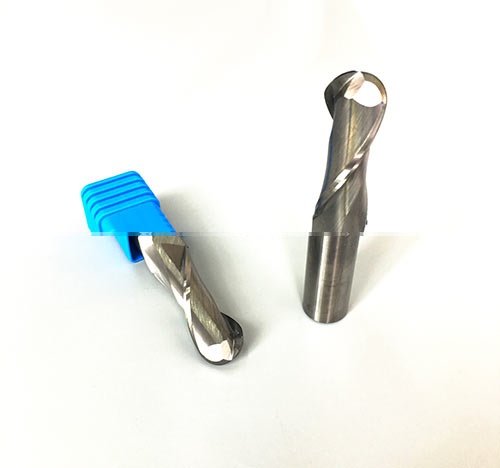
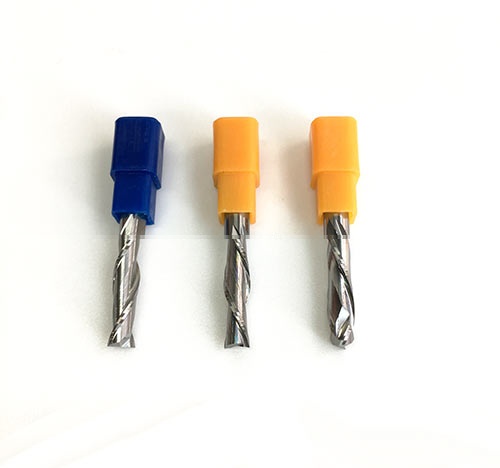
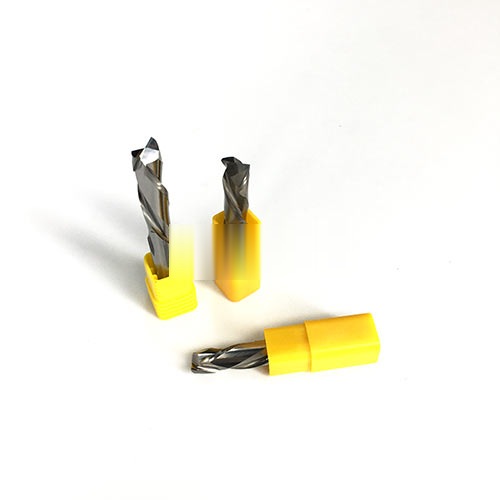
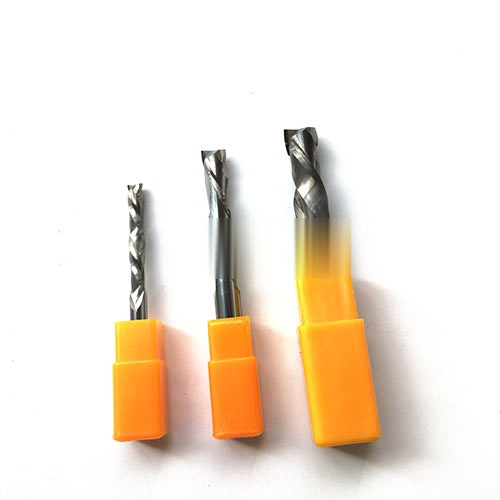
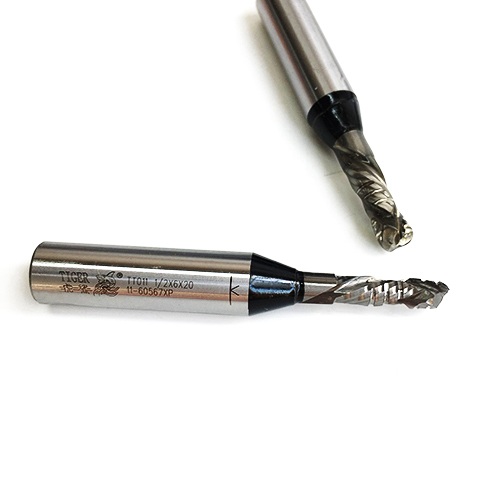
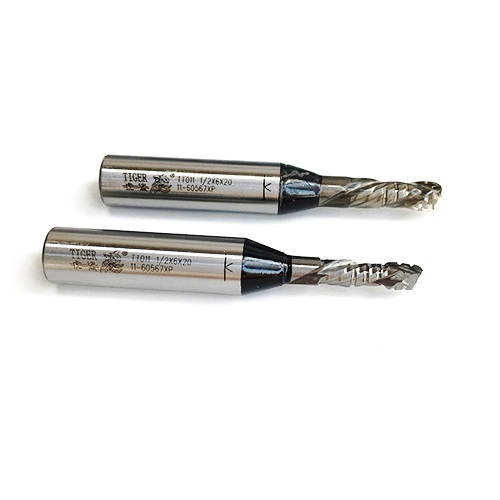
Compression spiral router bits with down-cut tip and up-cut body, for chip-free cutting of double-sided melamine, veneered and HPL panels on CNC nesting routers.
Specifications
- Type
- Compression spiral router bit
- Geometry
- Down-cut at the tip, up-cut above (compression)
- Flutes
- Z 2+2 and Z 3+3
- Shank
- 6 mm, 6.35 mm (1/4"), 12.7 mm (1/2")
- Cutting Diameter
- 6 mm to 16 mm
- Cutting Length
- 20 mm to 60 mm
- Materials
- Double-sided melamine, HPL, veneered MDF, chipboard, plywood
- Machine
- CNC nesting router, machining centre, edge-banding line
A compression bit solves one specific problem: cutting a panel that is finished on both faces in a single pass. The tip is down-cut, so it presses the top laminate into the board; the upper flutes are up-cut, so they press the bottom laminate up. Both faces come out clean, and the part needs no secondary trimming.
Why it works
A normal up-cut spiral pulls the fibres and the laminate upward, which lifts the top face and leaves a fuzzy edge. A down-cut spiral pushes down and protects the top face but lifts the bottom. The compression bit puts the transition point — the "neutral zone" — inside the panel thickness, so the cutting direction reverses before the tool reaches the top surface.
The critical specification: cutting length
The compression transition sits a fixed distance from the tip. If the panel is thinner than that distance, the transition falls outside the material and the bit behaves like a plain up-cut bit, chipping the top face. The cutting length must be longer than the panel thickness, and the panel thickness must sit above the transition point. This is the number to check before ordering.
Z 2+2 or Z 3+3
Z 2+2 is the general-purpose choice for nesting MDF and chipboard at normal feed rates. Z 3+3 gives a higher feed rate and a better finish because the chip load per tooth is lower, and it is preferred on machining centres running at high speed.
Using it correctly
A compression bit should only be used for through-cuts. Using it for a shallow groove puts the up-cut flutes in the cut and defeats the purpose. Feed rate must be high enough that the bit never dwells — a stalled compression bit burns the laminate at the transition point.
A compression bit is only chip-free when the panel is thicker than the transition point and thinner than the cutting length.
ZhongJian Tech manufactures PCD diamond and TCT carbide cutting tools for edgebanding and CNC machining in Futian Town, Anyuan District, Pingxiang City, Jiangxi Province, China. Send your machine brand and model, board material and the part number you are replacing for a specification and quotation. Email ferrytk803@gmail.com, phone / WhatsApp +86 13617995900.
Frequently asked questions
Which collet do I need for this bit?
The shanks available on this tool are 6 mm, 6.35 mm (1/4"), 12.7 mm (1/2"). Use the largest shank the collet accepts: at the same overhang a small shank deflects more, and deflection is what shows up as chatter, a poor wall finish and a shortened edge life. Keep the bit as short in the collet as the job allows.
What does Z 2+2 and Z 3+3 change in the cut?
Flute count sets how much chip room the bit has and how many edges are cutting at once. More flutes give a finer finish with less clearance for the chip; fewer flutes clear chips better and suit softer or gummier material and smaller diameters. This tool is Down-cut at the tip, up-cut above (compression).
Which materials does this geometry suit?
It is intended for double-sided melamine, HPL, veneered MDF, chipboard, plywood. Compression geometry is chosen when both faces of the panel stay visible: the down-cut tip protects the top face and the up-cut section protects the bottom in the same pass.
Can the diameter or cutting length be changed?
Yes. Cutting diameter, cutting length, shank and flute geometry are made to drawing. Send the material, the depth of cut and the machine, and the specification is confirmed against those rather than against the nearest stock size.