CNC Router Bits
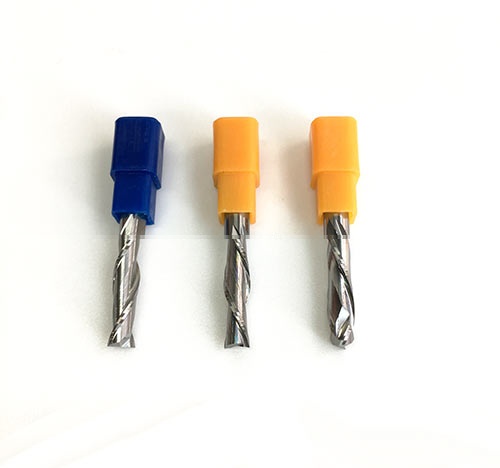
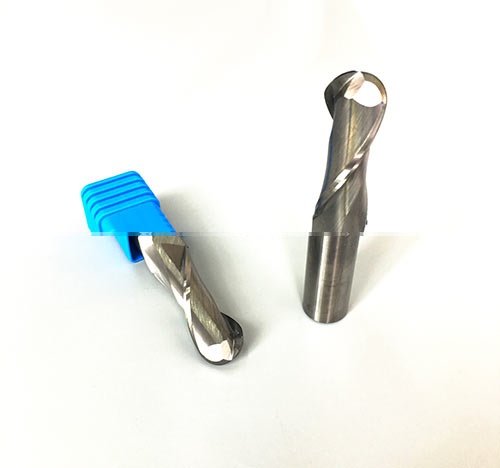
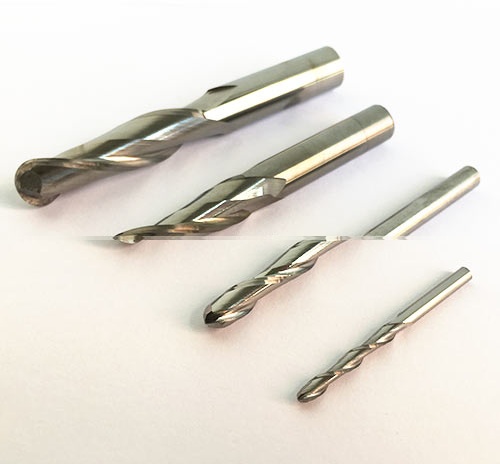
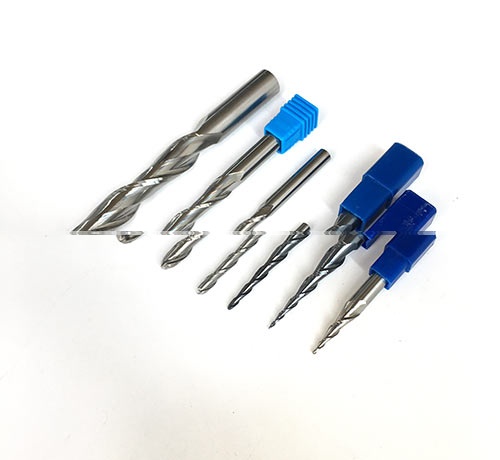
Two Flute Ball Nose Up-Cut Spiral Solid Carbide Router Bit for 3D Carving
Two-flute ball nose up-cut spiral solid carbide router bits, 0.8 mm to 20 mm cutting diameter, for 3D carving, contouring, fluted columns and radiused edges.
Specifications
- Type
- Ball nose spiral router bit
- Tip Shape
- Ball nose (spherical radius end)
- Tip Material
- Micrograin solid carbide
- Flutes
- 2 spiral cutting edges
- Cutting Edge Diameter (CED)
- 0.8 mm to 20 mm
- Cutting Edge Length (CEL)
- 3 mm to 75 mm
- Shank Diameter
- 3.175 mm, 4 mm, 5 mm, 6 mm, 6.35 mm, 8 mm, 10 mm, 12 mm, 12.7 mm, 16 mm, 20 mm
- Overall Length
- 38 mm to 150 mm
- Helix Direction
- Up-cut (right hand)
- Application
- 3D relief carving, contouring, fluted columns, cutting-board channels, countertop radius edges
- Machine
- CNC router, 3-axis and 4-axis machining centre, engraving machine
- Customization
- Diameter, radius, cutting length and shank produced to drawing
A ball nose bit cuts a spherical profile, so it can follow a curved surface without leaving the stepped shoulders a flat-bottom bit would produce. On a 3D relief the finishing pass is usually cut with a small ball nose - 0.8 mm to 3 mm - because the step-over distance that keeps the scallop height invisible scales with the radius of the tip.
These are two-flute solid carbide ball nose spiral bits, available from 0.8 mm up to 20 mm cutting diameter, with cutting lengths from 3 mm to 75 mm and shanks from 3.175 mm to 20 mm.
Why the tip radius sets the step-over
The scallop left between two parallel passes is a function of the ball radius and the step-over, not of the feed rate. A 6 mm ball nose at 3 mm step-over leaves a visible ridge; the same bit at 1 mm step-over leaves a surface that needs no sanding. The practical rule is that step-over should stay at or below roughly one tenth of the diameter for a finish that reads as smooth.
That is why roughing and finishing are separated. A larger ball nose removes the bulk of the material at a coarse step-over, and a small ball nose follows at a fine step-over for the surface. Running only the small bit wastes hours; running only the large bit leaves a scalloped surface.
Up-cut helix on a deep carve
The up-cut helix lifts chips out of the cut, which matters on the deep, narrow pockets that 3D carving produces. A down-cut ball nose would give a cleaner top edge but pack the chips into the bottom of the pocket, which is the wrong trade for relief work.
The flute geometry also keeps the cutting force directed up and back toward the shank, so a long, slender ball nose bit stays stable through a deep pass. Even so, the depth per pass should be reduced as the bit gets smaller: a 1 mm ball nose will snap long before a 6 mm one will deflect.
Materials and coatings
Uncoated micrograin carbide is the standard choice for hardwood, softwood, MDF and modelling foam. On abrasive MDF and on composites, an AlCrN coating reduces flank wear and keeps the ball radius true for longer, which matters because a worn ball nose changes the surface it produces.
For aluminium and plastics, the same geometry is used with a polished flute and a sharper rake. A ball nose in aluminium is a different tool from the wood version even though the shape looks identical.
Shank sizes and machine fit
The range covers 3.175 mm (1/8 inch), 4 mm, 5 mm, 6 mm, 6.35 mm (1/4 inch), 8 mm, 10 mm, 12 mm, 12.7 mm (1/2 inch), 16 mm and 20 mm. Small-diameter bits are normally supplied on a larger shank - a 1 mm ball on a 3.175 mm shank - because the collet has to grip something substantial.
Keep the overhang to the minimum the job allows. On a long series bit the deflection at the tip is the limiting factor for both finish and tool life.
How to specify the bit
Five values decide the order: ball radius (half the cutting diameter), cutting edge length, shank diameter, overall length and whether the flute is up-cut or down-cut. Send the relief depth and the material if you want a step-over recommendation as well.
The ball radius decides the finish; the flute direction decides whether the chips leave the pocket.
ZhongJian Tech manufactures solid carbide and PCD router tooling for panel furniture, nesting and CNC machining, from our factory in Futian Town, Anyuan District, Pingxiang City, Jiangxi Province, China. Send the material you cut, the machine and the tool geometry you run now, and we will confirm the specification and quotation. Email ferrytk803@gmail.com, phone / WhatsApp +86 13617995900.
Available sizes
Item numbers below are the standard combinations we hold tooling for. Intermediate lengths and special shank sizes are produced to order.
N2QX3.0.803 | CED 0.8 mm | CEL 3 mm | SHK 3.175 mm | OVL 38 mm
N2QX3.104 | CED 1 mm | CEL 4 mm | SHK 3.175 mm | OVL 38 mm
N2QX3.1.204 | CED 1.2 mm | CEL 4 mm | SHK 3.175 mm | OVL 38 mm
N2QX3.12 | CED 3.175 mm | CEL 12 mm | SHK 3.175 mm | OVL 38 mm
N2QX3.17 | CED 3.175 mm | CEL 17 mm | SHK 3.175 mm | OVL 38 mm
N2QX3.25 | CED 3.175 mm | CEL 25 mm | SHK 3.175 mm | OVL 50 mm
N2QX412 | CED 4 mm | CEL 12 mm | SHK 4 mm | OVL 40 mm
N2QX617 | CED 6 mm | CEL 17 mm | SHK 6 mm | OVL 50 mm
N2QX625 | CED 6 mm | CEL 25 mm | SHK 6 mm | OVL 55 mm
N2QX632 | CED 6 mm | CEL 32 mm | SHK 6 mm | OVL 60 mm
N2QX6.25 | CED 6.35 mm | CEL 25 mm | SHK 6.35 mm | OVL 55 mm
N2QX825 | CED 8 mm | CEL 25 mm | SHK 8 mm | OVL 60 mm
N2QX835 | CED 8 mm | CEL 35 mm | SHK 8 mm | OVL 80 mm
N2QX1025 | CED 10 mm | CEL 25 mm | SHK 10 mm | OVL 60 mm
N2QX1235 | CED 12 mm | CEL 35 mm | SHK 12 mm | OVL 80 mm
N2QX12.35 | CED 12.7 mm | CEL 35 mm | SHK 12.7 mm | OVL 80 mm
N2QX1645 | CED 16 mm | CEL 45 mm | SHK 16 mm | OVL 110 mm
N2QX2075 | CED 20 mm | CEL 75 mm | SHK 20 mm | OVL 150 mm
Frequently asked questions
Which collet do I need for this bit?
The shanks available on this tool are 3.175 mm, 4 mm, 5 mm, 6 mm, 6.35 mm, 8 mm, 10 mm, 12 mm, 12.7 mm, 16 mm, 20 mm. Use the largest shank the collet accepts: at the same overhang a small shank deflects more, and deflection is what shows up as chatter, a poor wall finish and a shortened edge life. Keep the bit as short in the collet as the job allows.
What does 2 spiral cutting edges change in the cut?
Flute count sets how much chip room the bit has and how many edges are cutting at once. More flutes give a finer finish with less clearance for the chip; fewer flutes clear chips better and suit softer or gummier material and smaller diameters.
Which materials does this geometry suit?
Match the feed and the depth per pass to the material. A bit fed too slowly rubs the edge instead of cutting it, which costs edge life faster than a slightly higher feed does.
Can the diameter or cutting length be changed?
Yes. Cutting diameter, cutting length, shank and flute geometry are made to drawing. Send the material, the depth of cut and the machine, and the specification is confirmed against those rather than against the nearest stock size.