CNC Router Bits
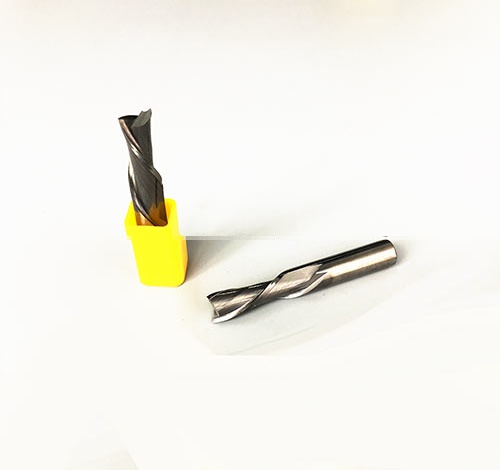
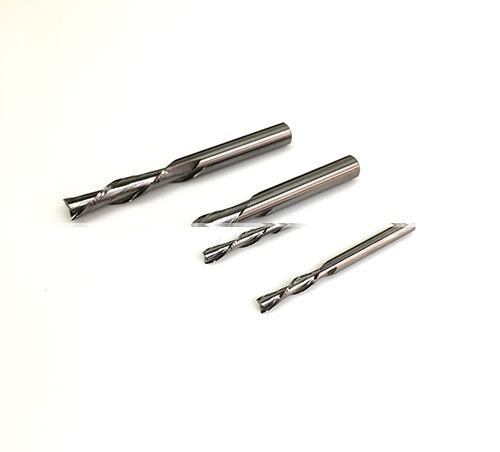
Down-Cut 2 Flute Solid Carbide Spiral Router Bits for Wood and Laminate
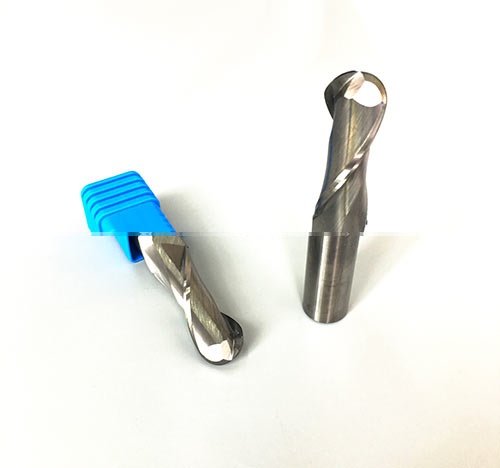
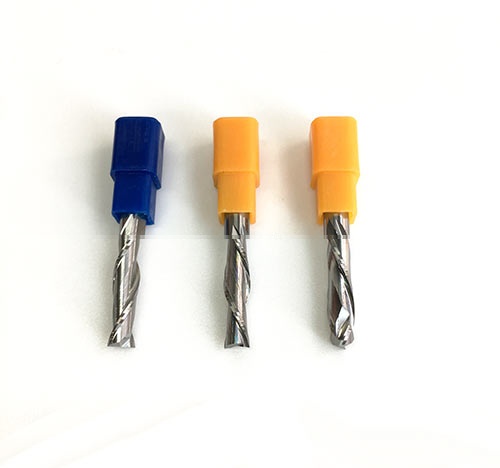
Down-cut 2-flute solid carbide spiral router bits, 3.175 mm to 12.7 mm cutting diameter, for grooves, dadoes and inlays in veneered and laminated board.
Specifications
- Type
- Down-cut spiral router bit
- Tip Material
- Micrograin solid carbide
- Flutes
- 2 spiral cutting edges
- Cutting Edge Diameter (CED)
- 3.175 mm, 4 mm, 6 mm, 6.35 mm, 8 mm, 10 mm, 12 mm, 12.7 mm
- Cutting Edge Length (CEL)
- 12 mm to 45 mm
- Shank Diameter
- 3.175 mm, 4 mm, 6 mm, 6.35 mm, 8 mm, 10 mm, 12 mm, 12.7 mm
- Overall Length
- 40 mm to 100 mm
- Helix Direction
- Down-cut (right hand)
- Application
- Grooves, dadoes, inlays, hinge recesses, laminate and veneer trimming
- Machine
- CNC router, nesting router, machining centre, trimming router
- Customization
- Diameter, cutting length, shank and coating produced to drawing
A down-cut spiral bit cuts with the helix winding downward, so the cutting force pushes the surface fibres down into the board instead of lifting them. On a veneered, melamine or HPL-faced panel that is the difference between a clean edge and a line of torn fibres along the top of the groove.
These are two-flute micrograin solid carbide bits with cutting diameters from 3.175 mm to 12.7 mm and cutting lengths from 12 mm to 45 mm, for groove, dado, inlay and recess work on a CNC router or a trimming router.
When a down-cut bit is the right choice
The down-cut geometry is chosen for the visible face. Any operation where the top surface stays visible after machining - a hinge recess on a finished door, a decorative groove on a countertop, an inlay channel on a veneered panel - is a candidate. The bit leaves the top face clean and pushes the minor burr to the underside, where it either does not matter or is cleaned up in a later pass.
The trade-off is chip evacuation. A down-cut helix pushes chips down into the cut rather than lifting them out, so the flute has to carry them the long way. In deep grooves in gummy material this shows up as chip packing, heat and a slower practical feed rate.
Two flutes: chip room versus finish
Two flutes give a good balance on a down-cut bit. A single flute clears chips better but leaves a rougher wall; three flutes would give a finer finish but leave too little room for the chips that are being pushed the wrong way. Two flutes is the count that keeps the cut stable while still evacuating enough material.
Depth of cut and feed rate
Because chip clearance is reduced, a down-cut bit is normally run at a shallower depth per pass and a slightly lower feed than an equivalent up-cut bit. The exact numbers depend on the material, the bit diameter and the spindle speed, but the principle is the same: take two shallower passes rather than one deep one, and let the bit cut rather than rub.
On thin veneer or a delicate laminate face, a finishing pass of 0.2 to 0.5 mm at full depth gives the cleanest result, because the load on the edge is low and the fibres are held down by the helix rather than being pushed sideways.
Shank and tool holder
The bits are available with 3.175 mm, 4 mm, 6 mm, 6.35 mm, 8 mm, 10 mm, 12 mm and 12.7 mm shanks, so the same geometry can be run in a small trimming router with a 1/8 inch collet and in a production nesting machine with a 1/2 inch holder. Use the shortest shank extension that reaches the work: overhang is the main source of deflection on small-diameter bits.
How to specify the bit
Four values decide the order: cutting edge diameter, cutting edge length, shank diameter and overall length. Add the material and the operation if you want a coating recommendation - uncoated micrograin carbide is normal for wood and laminate, while an AlCrN or DLC coating helps on abrasive MDF and on abrasive-filled composites.
A down-cut bit is chosen for the face you can see, and paid for in chip clearance.
ZhongJian Tech manufactures solid carbide and PCD router tooling for panel furniture, nesting and CNC machining, from our factory in Futian Town, Anyuan District, Pingxiang City, Jiangxi Province, China. Send the material you cut, the machine and the tool geometry you run now, and we will confirm the specification and quotation. Email ferrytk803@gmail.com, phone / WhatsApp +86 13617995900.
Available sizes
Item numbers below are the standard combinations we hold tooling for. Intermediate lengths and special shank sizes are produced to order.
A2LXD3.12 | CED 3.175 mm | CEL 12 mm | SHK 3.175 mm | OVL 40 mm
A2LXD417 | CED 4 mm | CEL 17 mm | SHK 4 mm | OVL 50 mm
A2LXD617 | CED 6 mm | CEL 17 mm | SHK 6 mm | OVL 50 mm
A2LXD622 | CED 6 mm | CEL 22 mm | SHK 6 mm | OVL 55 mm
A2LXD625 | CED 6 mm | CEL 25 mm | SHK 6 mm | OVL 60 mm
A2LXD825 | CED 8 mm | CEL 25 mm | SHK 8 mm | OVL 70 mm
A2LXD1025 | CED 10 mm | CEL 25 mm | SHK 10 mm | OVL 80 mm
A2LXD1035 | CED 10 mm | CEL 35 mm | SHK 10 mm | OVL 90 mm
A2LXD12.35 | CED 12.7 mm | CEL 35 mm | SHK 12.7 mm | OVL 90 mm
A2LXD12.45 | CED 12.7 mm | CEL 45 mm | SHK 12.7 mm | OVL 100 mm
Frequently asked questions
Which collet do I need for this bit?
The shanks available on this tool are 3.175 mm, 4 mm, 6 mm, 6.35 mm, 8 mm, 10 mm, 12 mm, 12.7 mm. Use the largest shank the collet accepts: at the same overhang a small shank deflects more, and deflection is what shows up as chatter, a poor wall finish and a shortened edge life. Keep the bit as short in the collet as the job allows.
What does 2 spiral cutting edges change in the cut?
Flute count sets how much chip room the bit has and how many edges are cutting at once. More flutes give a finer finish with less clearance for the chip; fewer flutes clear chips better and suit softer or gummier material and smaller diameters.
Which materials does this geometry suit?
Match the feed and the depth per pass to the material. A bit fed too slowly rubs the edge instead of cutting it, which costs edge life faster than a slightly higher feed does.
Can the diameter or cutting length be changed?
Yes. Cutting diameter, cutting length, shank and flute geometry are made to drawing. Send the material, the depth of cut and the machine, and the specification is confirmed against those rather than against the nearest stock size.