Oct 3, 2026
Why the Right Diamond Blade Matters for Marble, Dekton and Concrete
Marble, Dekton and concrete demand different diamond segments. Learn how segment design, bond hardness and cooling water affect cutting speed and blade life.
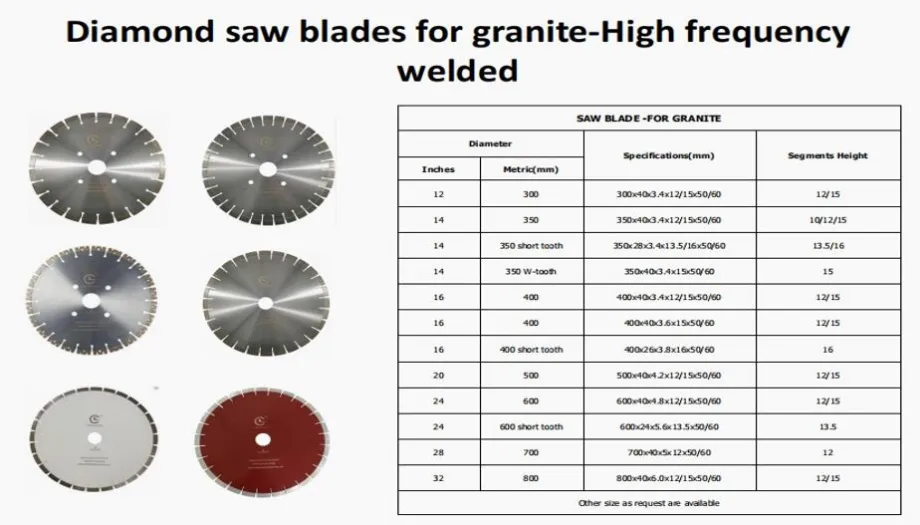
Marble, Dekton and concrete are all 'stone' to a purchasing system, and completely different materials to a diamond blade. Choose one boring segment spec for all three and you will cut slowly, glaze segments or destroy the blade in a week. The right blade is matched to the material's hardness, abrasiveness and density - and to the machine's water supply.
Three materials, three cutting behaviors
Marble is relatively soft and abrasive. It cuts easily, but the diamond segments wear quickly and the blade produces a large volume of abrasive slurry. Dekton and other ultra-compact surfaces are the opposite: extremely dense and hard, generating heat at the contact point and resisting penetration, so the segment must stay sharp and the blade must run cool. Concrete sits between, complicated by aggregate - hard stones and steel reinforcement require tougher bonds and segments that expose fresh diamond as they wear.
How a diamond blade cuts
A diamond blade does not cut like a saw tooth. Metal-bonded or sintered segments carrying diamond crystals grind through the material, and the bond wears back at a controlled rate to expose fresh diamond. That balance - bond hardness against material hardness - is the entire science of segment selection. A bond that is too soft for the material wears away before the diamonds have worked, wasting segment life; a bond that is too hard glazes over and stops cutting, which is why you see sparks and slow feed instead of a steady cut.
Segment design for each material
For hard, dense surfaces such as Dekton, segments are formulated with harder, more wear-resistant bonds and finer diamonds to keep the cut efficient without overloading the machine. For marble, softer bonds let the segment self-sharpen in the abrasive slurry. For concrete, segmented blades with slotted rims clear debris and handle reinforcement, with the slot design also helping heat escape. Segment height and diamond concentration are specified to the job: production slab lines and precision countertop work need different wearing characteristics.
Water and cooling are part of the specification
Almost all stone cutting is wet cutting, and the cooling water is not a detail - it is a component of the cutting system. Water carries heat away from the segment, flushes the slurry and keeps the blade running true. Insufficient flow shows up as segment glazing, blade wobble and blackened cut surfaces. Before blaming the blade, check that water reaches the contact zone at the required volume, that nozzles are not clogged, and that the machine's drive power suits the material.
Blade care that pays back
Mount blades cleanly on undamaged flanges, keep the arbor and flange faces free of slurry, and never force a glazed blade through dense material - dress it or reduce the feed so the bond can open up again. Store blades flat and dry. A diamond blade that is treated as a precision tool lasts through many times the square meters of one that is treated as a consumable.
Ordering the right blade
Tell us the material (including the exact compact surface brand where relevant), the machine's power and RPM range, the maximum cutting depth and the wet or dry setup. ZHONGJIAN TECH produces diamond segmented blades for marble, Dekton, engineered stone and concrete panel cutting with the diameter, segment height and bore customized to your machine.
Send your machine and material details to ferrytk898@gmail.com and we will confirm a segment specification and quotation.