Choosing Saw Blades for Double-Sided Coated Chipboard and MDF: Tooth Count, RPM and Feed Rate Guide
Double-sided coated panels — melamine chipboard, foil-laminated MDF, paper-overlay boards — are the backbone of panel furniture production. Cutting them without chipping requires matching the saw blade to the material thickness, the machine type and the quality requirement. This guide covers the three key parameters: tooth count, RPM and feed rate.
Tooth count: more is not always better
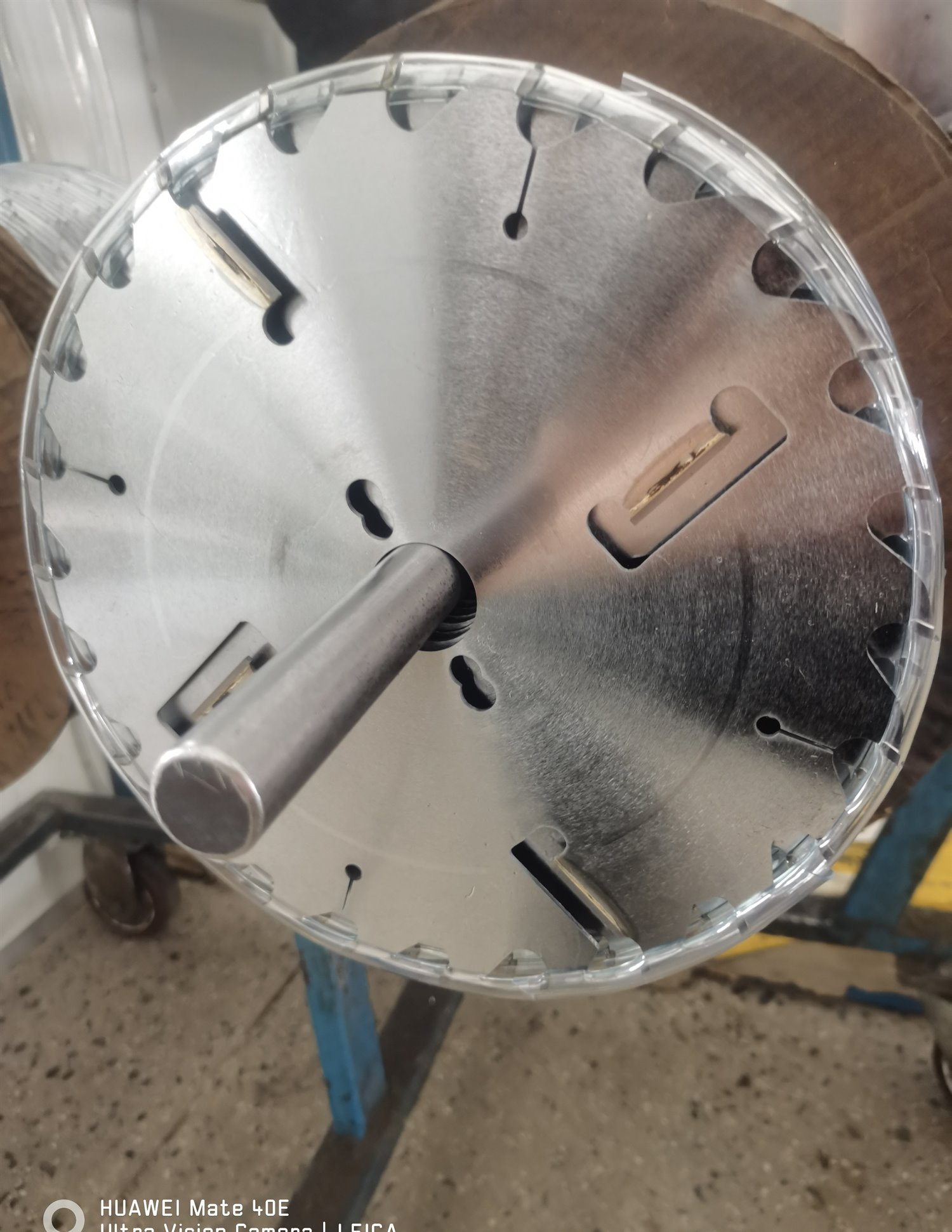
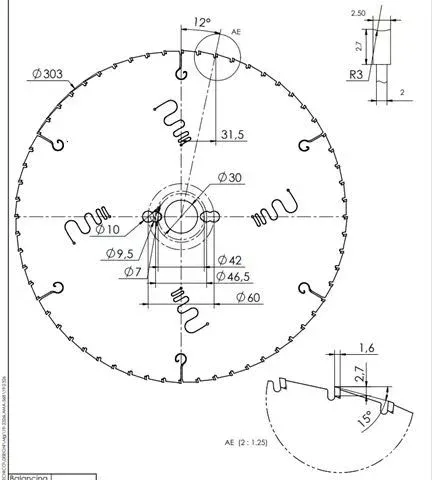
The number of teeth determines the feed per tooth — how much material each tooth removes. For 19 mm coated panels, a feed per tooth of 0.08 to 0.15 mm gives the best surface quality. On a CNC beam saw with a feed rate of 20 m/min, a Ø303 mm blade with 60 teeth produces a feed per tooth of 0.11 mm at 4,000 RPM — right in the optimal range.
Too many teeth with too high a feed rate generates heat and burns the coating. Too few teeth with too low a feed rate causes chipping. The tooth count must match the machine’s feed rate range.
RPM: matching the cutting speed
The cutting speed for coated panels should be between 60 and 100 m/s at the tooth tip. For a Ø303 mm blade, this translates to 3,500 to 5,900 RPM. Lower RPM reduces heat but increases the feed per tooth; higher RPM gives a smoother cut but generates more heat. The optimal RPM depends on the coating type and the panel thickness.
Feed rate: balancing quality and productivity
The feed rate is the speed at which the panel moves through the blade. Higher feed rates increase productivity but reduce the feed per tooth, which can cause chipping. Lower feed rates improve surface quality but reduce throughput. For 19 mm coated panels on a CNC beam saw, feed rates of 15 to 25 m/min are typical, depending on the coating and the quality requirement.
Tooth geometry: HZ/DZ vs ATB vs TCG
The tooth grind affects how the cutting force is applied to the panel surface. ATB (alternate top bevel) teeth shear the surface alternately from left and right, which works well for solid wood but can chip brittle coatings. TCG (triple chip grind) teeth have a flat rake with a bevelled edge, suitable for hard materials. HZ/DZ (hollow-face) teeth have a concave face that concentrates the cutting force, delivering the best surface quality on coated panels without a scoring blade.
Frequently asked questions
What tooth count is best for 19 mm melamine-coated chipboard?
For a Ø303 mm blade on a CNC beam saw, 60 to 72 teeth is optimal for 19 mm coated panels. This provides a feed per tooth in the 0.08 to 0.15 mm range at typical CNC feed rates.
Can I cut coated panels without a scoring blade?
With the right blade geometry — such as HZ/DZ hollow-face teeth — yes. The concave face grind shears the coating cleanly without the lifting action that causes chipping.
Work with the manufacturer
Pingxiang Xinchen Furnace produces saw blades for coated panels, solid wood and non-ferrous metals. Contact ferrytk898@gmail.com.