Saw Blade Technology Trends Reshaping Panel Cutting
PCD tipping, stepped tooth profiles, laser grinding and thinner plates: the four technology shifts changing how panel cutting lines are specified.

Saw blades change slowly - the basic geometry has been understood for a century - but the technology around them is moving faster than most buyers realize. Four shifts are reshaping how panel cutting lines are specified today.
1. PCD tipping moving from specialty to standard
Polycrystalline diamond tips were once reserved for the most demanding industrial lines. As manufacturing matured, PCD has moved into mainstream panel and woodworking blades - because the economics became obvious: many times the edge life of carbide, with edge quality that does not drift between sharpenings. For high-volume production, PCD is now the default rather than the upgrade.
2. Stepped tooth profiles replacing scoring units
Scoring saws exist to solve one problem: chipping on the decorative face. Stepped, surface-controlling tooth profiles - the family the Kunlun teeth shape belongs to - solve the same problem with geometry instead of hardware. The result is scoring-saw-free panel cutting with cleaner edges: one blade, one setup, both faces finished, no second motor and no alignment task.
For machine builders, that is a design opportunity; for shops, it is a maintenance simplification. Expect more blade specifications to be written around the profile rather than the scoring unit.
3. Laser grinding tightening geometry repeatability
As profiles become more complex - stepped forms, fine tooth counts, PCD tips - grinding accuracy becomes the limiting factor. Laser grinding does not wear like an abrasive wheel, so the thousandth tooth matches the first. The practical benefit is consistency across a batch and predictable resharpening: the geometry the designer intended is the geometry the operator gets.
4. Thinner plates and reduced kerf
Ultra-thin plates in the 1.3-2.0 mm range cut kerf roughly in half versus conventional blades. On high-volume panel lines, the material saved becomes a direct margin improvement - and because less material is removed, machine load drops too. Thin plates depend on well-tensioned bodies, which is why this trend arrives with better blade-body engineering rather than alone.
What to watch for as a buyer
Two things. First, specifications are becoming more integrated: a blade is no longer a standalone consumable but part of a cutting system - machine, spindle, extraction and blade together. Second, the supplier conversation is shifting from "what blade do you want" to "what cut do you need" - profile, kerf, tip and grinding chosen to deliver the edge standard.
Buyers who can describe their application - material mix, machine, edge standard, volume - will get better specifications than those who only quote a part number.
The next advantage in panel cutting will not come from a faster machine. It will come from a better-matched cutting edge.
Kunlun Teeth Shape: Scoring-Saw-Free Panel Cutting with Cleaner Edges
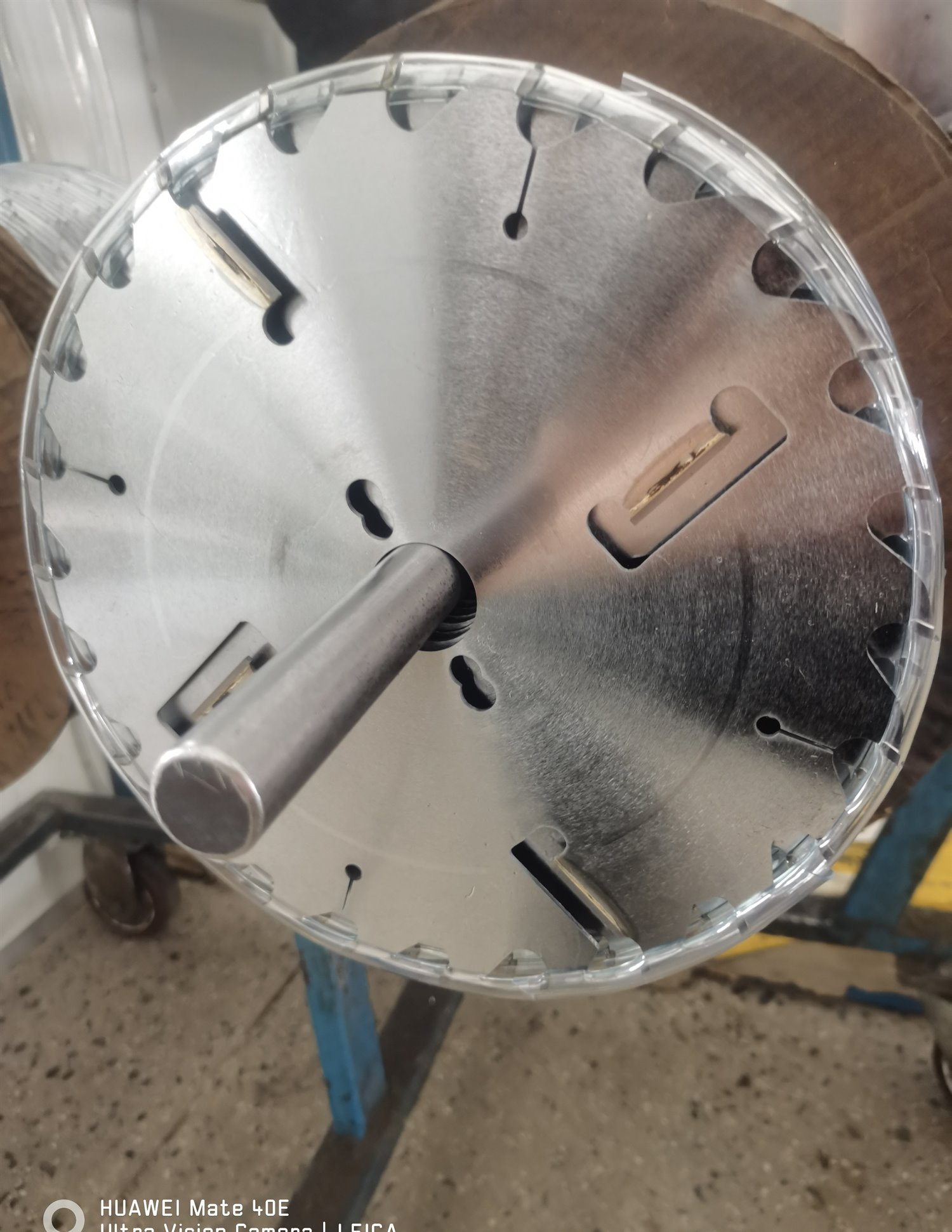
The Kunlun teeth shape is a conical (step) tooth profile that performs preliminary trimming on panel edges with a single blade, enabling scoring-saw-free panel cutting with cleaner edges. It greatly minimizes edge chipping, rough burrs and notch tearing, eliminates uneven cutting edges caused by edge chipping, and delivers a flawless finish on single-sided or double-sided panels without a scoring saw.
ZHONGJIAN TECH manufactures PCD and carbide saw blades with the Kunlun teeth shape for woodworking, panel processing and aluminium cutting. Send your machine, material and size requirements to ferrytk898@gmail.com and we will confirm a blade specification and quotation.