Saw Blade Care Between Shifts: Cleaning, Storage and Transport
Blade life is decided as much between cuts as during them. How to clean, store and transport saw blades so they stay accurate and safe.

A saw blade spends most of its life not cutting. Between shifts, between jobs and between machines, it sits in a rack, a drawer or a van - and that is where a surprising amount of damage happens. Cleaning, storage and transport are not housekeeping; they are part of the tool's service life.
Cleaning: more than appearance
Resin, pitch and metal chips on the tooth face change the cutting geometry. A blade that is visually dirty is also functionally dirty: the tooth cannot shear cleanly, friction rises and the edge wears faster. Clean with a proper blade cleaner or a resin solvent, not with a wire brush that can damage tips. Dry thoroughly - moisture left on a carbide or PCD tip can start corrosion at the braze joint.
Storage: flat, dry and protected
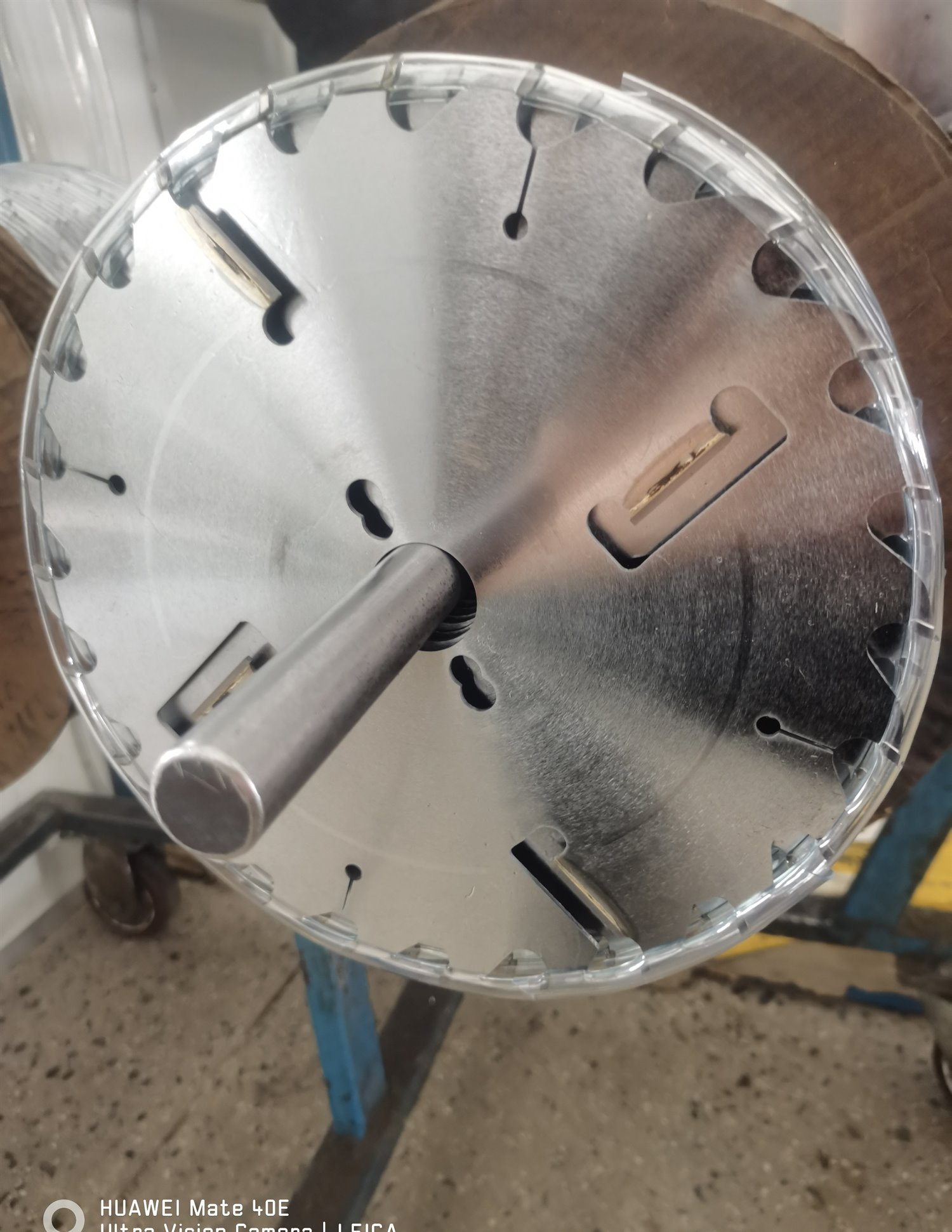
Blades should be stored flat or in a proper rack, never leaning on a tooth. Each blade should have its own protection - a sleeve, a blade case, or a dedicated slot. Stacked loosely, blades touch each other, and tooth-to-tooth contact chips tips. Humidity is the other enemy: a dry cabinet or a sealed case prevents the slow corrosion that ruins stainless and tool steel alike.
Transport: the highest-risk moment
Moving a blade between the shop and a job site is when most damage occurs. A blade loose in a vehicle can slide, drop or take impact on a single tooth. Use a rigid case, or at minimum a blade sleeve and a padded bag; never rest anything on top of a blade. For PCD blades, whose value is concentrated in a few millimeters of tip, the case is not optional.
Handling with gloves and by the plate
Handle blades by the plate, never by the teeth. Gloves protect the hands and, just as importantly, keep skin oils off the steel. Place blades down carefully - a blade dropped flat is usually fine, a blade dropped on its edge can bend or chip.
The maintenance routine that pays back
Clean after every shift that cuts resinous or wet material. Inspect the edge before each installation: chips, missing tips and flat spots. Log hours per set, and rotate blades through scheduled sharpening instead of waiting for failure. Keep a sharp spare set ready so maintenance is planned, not reactive.
None of this is complicated, and all of it is cheaper than replacing a PCD blade because it was stored where something fell on it.
Sharpening decides how well a blade cuts; care decides how long it keeps cutting.
ZHONGJIAN TECH manufactures PCD and carbide saw blades with the Kunlun teeth shape for woodworking, panel processing and aluminium cutting. Send your machine, material and size requirements to ferrytk898@gmail.com and we will confirm a blade specification and quotation.