PCD Blade Service Life and Resharpening: What to Expect
How long a PCD blade lasts, what shortens its life, when resharpenning pays and how to plan replacements around production.

The commercial case for a PCD saw blade rests on one number: how many panels it cuts before it needs attention. That number depends on the blade, the material and - more than most buyers expect - on how the blade is treated between cuts.
What determines service life
Four factors dominate. Material abrasiveness: MDF and composite panels wear an edge faster than solid wood. Contamination: a single hidden screw can end a tip. Machine stability: vibration and runout multiply wear at the edge. And heat: running a blade hot softens the tip and shortens its life, which is why a sharp blade that is allowed to rub rather than cut is a false economy.
A PCD blade used well on clean panel material will outlast a comparable carbide blade several times over. Used badly - misaligned, overheated, fed too fast - it degrades like any other blade.
The wear signals to watch
PCD wears slowly and then fails suddenly, which makes monitoring important. Watch for a gradual increase in cutting resistance (rising machine load), a change in the sound of the cut, and the first signs of edge chipping on the decorative face. Those signals appear long before the blade stops cutting - and they are the point at which resharpenning is worthwhile, not after.
Resharpening: when and how
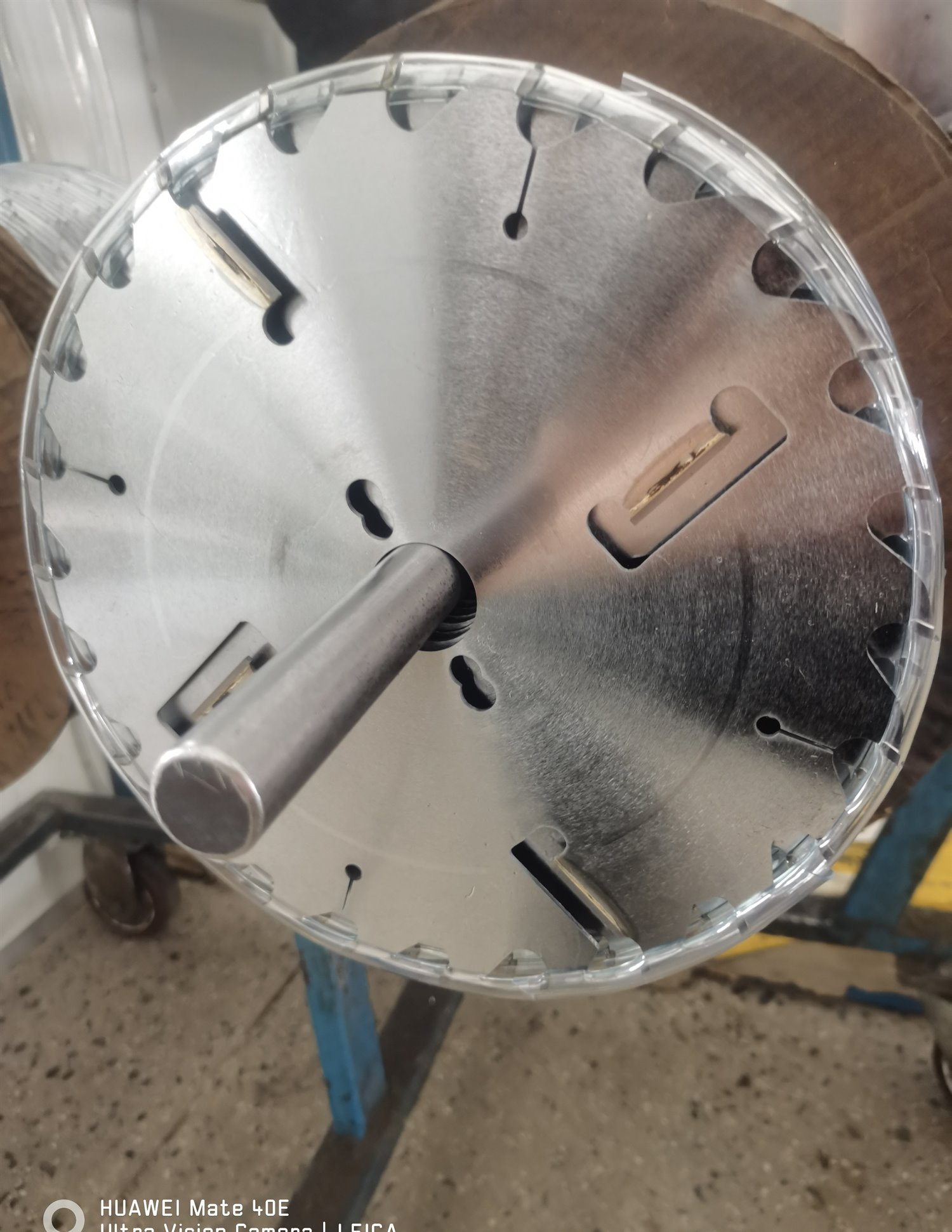
PCD tips can be resharpened, but the process is different from carbide: it requires diamond grinding equipment and careful control of the tip geometry. The key question is whether the tooth profile - including a stepped geometry like the Kunlun teeth shape - can be re-established without removing too much tip. A supplier should confirm the maximum number of regrinds and the geometry they can restore.
Plan resharpening as preventive maintenance rather than emergency repair: send blades when the cut quality starts to drift, not when it has failed. That keeps a spare set in rotation and avoids production stops.
Planning replacements
Track blade life in linear meters or panels per set, per machine position. With that data, you can forecast resharpening intervals, keep the right number of spare sets, and budget blade cost per panel rather than per blade. On a two-shift panel line, that forecast is usually the difference between a planned changeover and a stopped line.
Keeping a spare set
The most expensive blade is the one that fails mid-shift with no replacement. Keep a sharp spare set for each position, stored flat and dry, and rotate sets through resharpening on condition. The spare costs money once; the missing spare costs money every time it happens.
ZHONGJIAN TECH manufactures PCD and carbide-tipped saw blades with the Kunlun teeth shape for woodworking, panel processing and composite cutting. Send your machine, material and size requirements to ferrytk898@gmail.com and we will confirm a blade specification and quotation.