
Kunlun Teeth
Removing the Scoring Saw from the Line: What Actually Changes
What changes on the shop floor when the scoring station goes: setup steps, alignment checks, spare parts, sharpening logistics and the first week of production.
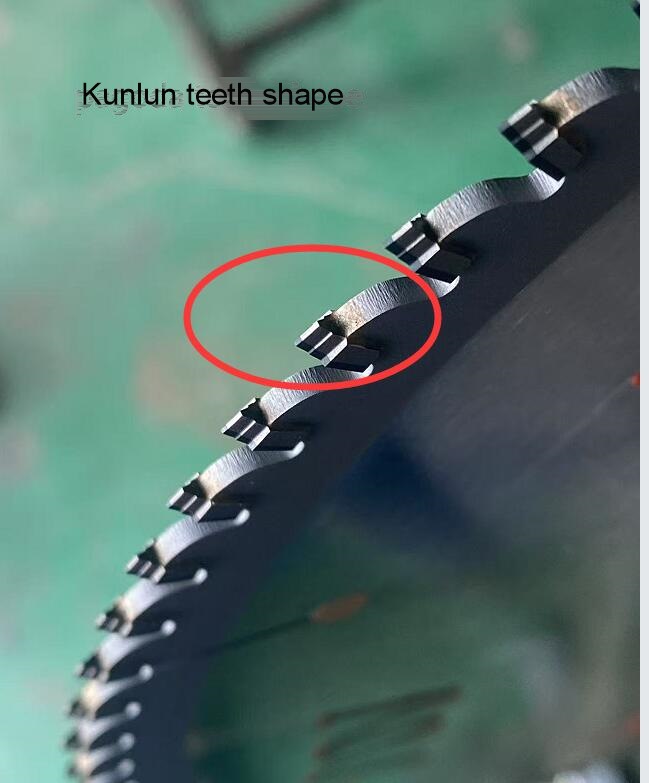
Removing a scoring saw from a panel line is usually described as a blade change. On the shop floor it is a process change: fewer setup steps, fewer alignment tasks, different maintenance, different spare parts, and a first week in which operators have to trust a cut they can no longer adjust. This article covers what actually changes when a Kunlun tooth blade replaces a scoring setup, what has to be planned before the switch, and where the change is likely to be resisted - because the resistance is normally practical rather than political. It is written for production managers and line supervisors, not for buyers comparing prices.
The hidden work behind a scoring station
A scoring station looks like a small blade in front of a big one. In daily production it is a series of tasks: setting the scoring blade height relative to the main blade, setting lateral offset, confirming parallelism, checking the first panel, re-checking after a blade change, and re-checking again when an edge problem appears. None of those tasks appears on a routing sheet. All of them are paid for in changeover time.
The station also has its own failure modes: a worn scoring blade, a drifted height setting, a damaged spindle, swarf in the adjustment. Each one produces the same symptom - chipping on the underside - and each one sends the operator through the same loop of checks.
Fewer setup steps per job
With a single blade, the scoring height and offset tasks disappear from the setup. What remains is the mounting and clamping of one blade, the guard and riving knife check, and the first-article inspection. The saving is not a single block of time; it is the removal of a sequence that has to be repeated at every changeover and re-verified whenever quality drifts.
The practical gain is predictability, not speed. A setup with fewer variables is easier to repeat, and a repeatable setup is what makes a shift handover uneventful.
Alignment and first-article checks
Alignment work does not disappear - it moves. The blade still has to be square to the table, the flange has to be clean and undamaged, and the arbor has to run true. What changes is that there is one alignment to control instead of two, and no relative alignment between them.
The first-article check becomes more important, not less, because there is no scoring blade to adjust if the edge is marginal. Build the check around the defects that matter on the actual product: visible chipping on the decorative face, burr on the core edge, and tear at the exit. Record it against the job, so that a later complaint can be traced to a specific setup rather than to memory.
Maintenance, spares and sharpening
One blade means one sharpening cycle instead of two, one reorder point, and one spare held instead of a pair. That simplifies the tool store and removes the case where a line stops because the scoring blade is at the sharpener and the main blade is not.
What changes in the other direction is the consequence of damage. A PCD blade costs more than a carbide scoring blade, and an impact that would have destroyed a small scoring blade now lands on the main blade. Operators should know that before the first shift, and the handling rules should be explicit: no blade on the floor, no blade in a drawer with other tooling, no fitting without a clean flange.
What operators will notice in the first week
Three things, reliably. The machine sounds different, because there is one blade doing the work instead of two. The cut is inspected differently, because there is no scoring blade to blame and no scoring blade to adjust. And the feed rate becomes the only lever left when the edge drifts, which means the feed rate has to be known rather than set by feel.
The third point is the one that causes problems. A line used to compensating with the scoring blade will try to compensate with feed, and if the tooth count was specified for a slower feed the blade will be pushed outside its working range. Write the feed rate on the job card for the first weeks.
What to plan before the switch
1. Confirm the machine can carry the blade. Arbor, flange, guard clearance, spindle condition and runout. This is a check, not an assumption.
2. Specify the blade against the dominant panel, not the average. One specification per machine, chosen for the material that carries most of the volume.
3. Run one machine before converting the line. A month on one saw produces evidence that a shift team will accept, and it contains the cost of being wrong.
4. Write the first-article check. Named defects, recorded per job, so that drift is visible early.
5. Brief the operators on handling and on the loss of the scoring lever. Including what to do when the edge drifts: check the blade, check the mounting, then the feed.
6. Keep a route back. If the panel mix changes or a difficult batch arrives, the ability to refit the scoring unit for that job is an asset, not a defeat.
Next step
If you are planning the switch on a specific line, send the machine model, the panel mix, the current changeover routine and the defects you see today to ferrytk898@gmail.com or use the contact form on this site. ZHONGJIAN TECH manufactures PCD and carbide-tipped saw blades with the Kunlun teeth shape, and we will confirm the specification and say which parts of the process change are worth planning for your line - including the cases where the scoring unit should stay.