
Kunlun Teeth
What a Scoring Saw Costs: A Panel Shop Cost Model
Four costs a scoring unit carries - the second cutting system, changeover time, rework and tooling inventory - and how to build a payback case on your own numbers.
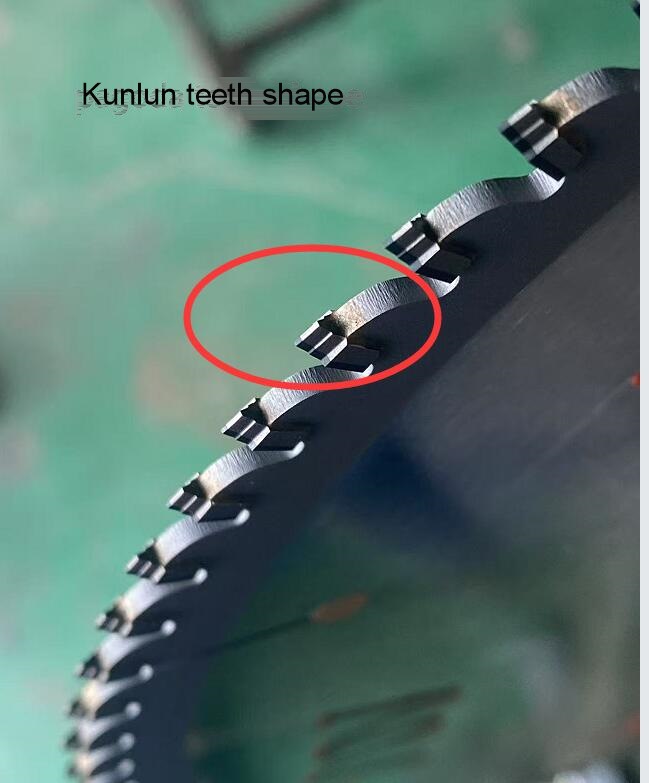
A scoring saw never appears on a purchase order as a cost. It appears as a second blade, a second spindle, an alignment task at every changeover, a sharpening cycle and occasionally a batch of panels that has to be reworked. This article puts those costs in one place so that a panel shop can build a payback case for a single Kunlun tooth blade on its own numbers rather than on a supplier's. It is written for the person who has to justify the switch - production manager, tooling engineer or owner - and it deliberately contains no claimed percentages, because a cost model with someone else's numbers in it is not a cost model.
Cost one: the second cutting system
A scoring unit is a system, not a blade. It brings a spindle, a motor, a drive, guarding, a height adjustment and a lateral adjustment. If the machine was bought with it, that cost is sunk and appears nowhere - which is exactly why it is easy to treat the scoring route as free. If a machine is being specified now, the difference in purchase price is real and belongs in the comparison.
The ongoing part is what matters here: a second blade to buy, a second blade to sharpen, and a second set of adjustments to maintain.
Cost two: setup and changeover time
Scoring alignment is a per-setup task: height relative to the main blade, lateral offset, parallelism. It is quick when everything is new and slow when it is not, and it has to be re-checked whenever a blade is changed or an edge problem appears. Count the minutes per changeover, multiply by changeovers per week, and price it at the loaded labour rate. That number is usually the largest single item in the case, and it is invisible on any invoice.
Setup time is the cost that funds most single-blade decisions, because it is paid every week rather than once.
Cost three: rework and downgraded panels
When the scoring alignment drifts, the first symptom is chipping on the underside. Depending on the product, that means a panel is trimmed again, moved to a lower grade, or scrapped. The cost per event is easy to state - material, labour, and the value difference between the intended grade and the one actually sold - and the frequency is usually known to the person who sorts the panels.
This is the item most often left out, because rework is absorbed into "normal production" rather than recorded. A week of tallying sorted panels is usually enough to make the case either clearly worth doing or clearly not.
Cost four: tooling inventory and sharpening
Two blades mean two reorder points, two sharpening cycles and two spares on the shelf if the line is not to stop waiting for the sharpener. The carrying cost is modest; the stoppage risk is not. A single blade reduces the tooling question to one cycle and one spare, which is a scheduling benefit as much as a cash one.
Set against that the purchase price of the replacement blade, which is higher than a carbide scoring blade. PCD costs more up front; the case for it rests entirely on how much of the four costs above it removes.
Building the case without invented numbers
1. Count the changeovers. Number per week, minutes per changeover spent on scoring alignment, loaded labour rate.
2. Count the sorted panels. Panels reworked, downgraded or scrapped because of underside chipping, over one representative week.
3. Price the tooling. Sharpening cost and frequency for the scoring blade, plus the value of the spare held against stoppage.
4. Compare the blade price difference. Single blade price against the scoring blade it replaces, over the same sharpening life.
5. Divide. Total annual saving against the price difference. If the answer is uncomfortably close, the decision is not economic yet - and it is better to know that before the purchase than after.
6. Test one line. Where the numbers are marginal, run the blade on one machine for a month and measure the same four items again. That converts a model into evidence, and evidence is what a sceptical production team will accept.
Where the payback does not appear
A single blade is the wrong purchase when volumes are low, when the panel mix includes materials the profile was not specified for, or when the scoring unit is already amortised and running without alignment problems. In those cases the tally of the four costs above will show a small total, and the honest recommendation is to keep the scoring setup and spend the money elsewhere.
The case also fails if the machine cannot support the blade: wrong arbor, runout, or a feed rate that a fine tooth count cannot clear. A payback model built on a machine that cannot run the blade is arithmetic without a foundation.
Next step
If you want the model built on your own figures, send your machine model, panel mix, changeover frequency and current edge standard to ferrytk898@gmail.com or use the contact form on this site. ZHONGJIAN TECH manufactures PCD and carbide-tipped saw blades with the Kunlun teeth shape, and we will confirm which specification your line supports - or tell you that the numbers do not justify the switch yet.