Cutting MDF, OSB, HPL and Acrylic: Blade Specifications That Work
Each panel material fails differently at the saw. How to match tooth geometry, kerf and tooth count to MDF, OSB, HPL and acrylic.

MDF, OSB, HPL and acrylic are all "panel materials", and they all cut badly with the wrong blade. Each fails in its own way: MDF dusts and dulls edges, OSB tears at the strands, HPL chips at the laminate layer, and acrylic crazes and melts. A blade specification that works across all four has to control the cut at the surface, not just clear the chip.
MDF: fine dust and edge wear
MDF is uniform but abrasive: the resin and fines wear a cutting edge quickly and generate fine dust that finds every gap. High tooth counts give the smooth edge MDF is usually specified for, and sharp, wear-resistant tips matter because a dull edge compacts dust into the cut face. Extraction matters as much as the blade - MDF dust is the dominant housekeeping problem on any line cutting it.
OSB: strands that want to lift
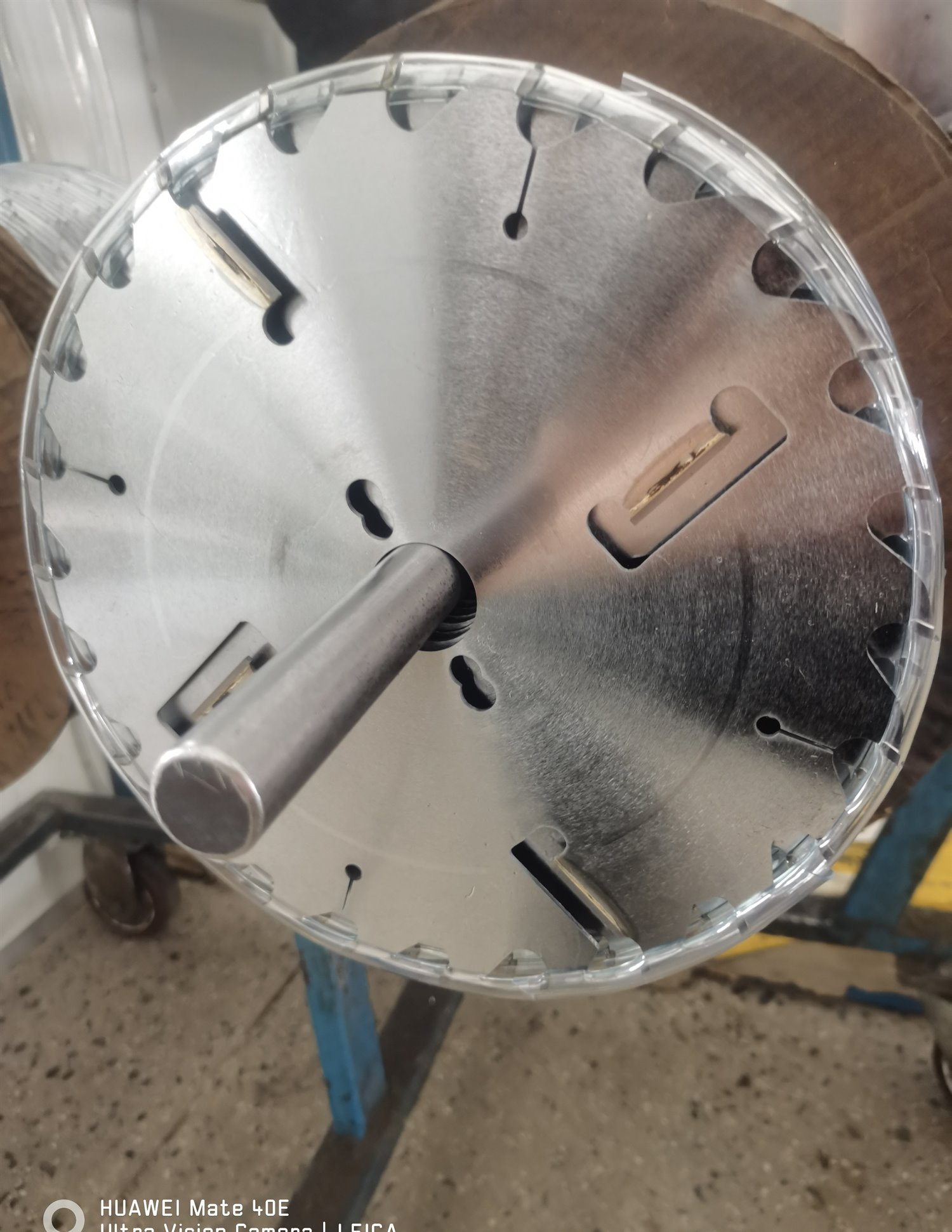
OSB is a tangle of large strands, and the failure mode is tear-out: strands lift rather than sever, leaving a fuzzy edge. A blade that supports the material through the cut - the function of a stepped, surface-controlling profile like the Kunlun teeth shape - reduces that lifting. A moderate tooth count with sufficient chip clearance helps keep the strands moving.
HPL: the laminate decides
High-pressure laminate is hard, dense and unforgiving. Chip-out at the decorative face is the standard complaint, and it usually starts at the exit side of the cut. Fine tooth geometry and a supported exit are the fix; on double-sided HPL, the ability to cut both faces cleanly in one pass is what replaces a scoring saw. That is precisely the case for scoring-saw-free panel cutting with cleaner edges.
Acrylic: heat is the enemy
Acrylic cuts cleanly when the blade is sharp and cool, and badly when friction builds. A thinner kerf removes less material and generates less heat; a sharp PCD edge cuts rather than rubs. Feed rate matters too - pushing too slowly lets heat build in one spot, pushing too fast cracks the edge.
A blade specification that covers all four
Fine-grain PCD tips with a high tooth count, an ultra-thin kerf where the machine allows, and a surface-controlling tooth geometry cover MDF, OSB, HPL and acrylic without changing blades between jobs. Where the mix includes double-sided laminates, confirm the profile is specified for both faces.
Tell the supplier the full material mix and the share of each - not just the material of the day. A blade chosen for the mix performs across it; a blade chosen for one material compromises on the rest.
Kunlun Teeth Shape: Scoring-Saw-Free Panel Cutting with Cleaner Edges
The defining benefit of the Kunlun teeth shape is this: scoring-saw-free panel cutting with cleaner edges. Only one conical (step) saw blade is needed for preliminary trimming on panel edges, which reduces wood fiber tearing and surface damage. It greatly minimizes edge chipping, rough burrs and notch tearing, improving the appearance and overall texture of exposed panels; it eliminates uneven cutting edges caused by edge chipping; and it enables single-sided or double-sided panel cutting, delivering a flawless finish on both sides without a scoring saw.
ZHONGJIAN TECH manufactures PCD and carbide-tipped saw blades with the Kunlun teeth shape for woodworking, panel processing and composite cutting. Send your machine, material and size requirements to ferrytk898@gmail.com and we will confirm a blade specification and quotation.