Cutting Aluminium on a Saw: PCD Blade Specifications That Work
Aluminium cuts differently from wood: heat, gumming and chip welding. How to specify a PCD blade for profiles, extrusions and plate.

Aluminium is soft, thermally conductive and chemically eager to weld itself to a cutting edge. Those three properties explain almost every aluminium cutting problem: the blade heats up, chips stick to the tooth, the cut tears, and the finish degrades within a few meters of profile.
The standard for aluminium is not "the sharpest blade" but "the blade that stays cool and does not pick up material". PCD tips, run with the right tooth geometry and lubricant, are the production answer.
What makes aluminium different
Wood fails by tearing; aluminium fails by smearing. The chip is long and continuous, it carries heat into the blade, and at the contact point it can pressure-weld to the tip. Once a chip sticks, the tooth stops cutting and starts rubbing - which generates more heat, more welding and a worse cut. Breaking that cycle is the whole discipline.
Tooth geometry for aluminium
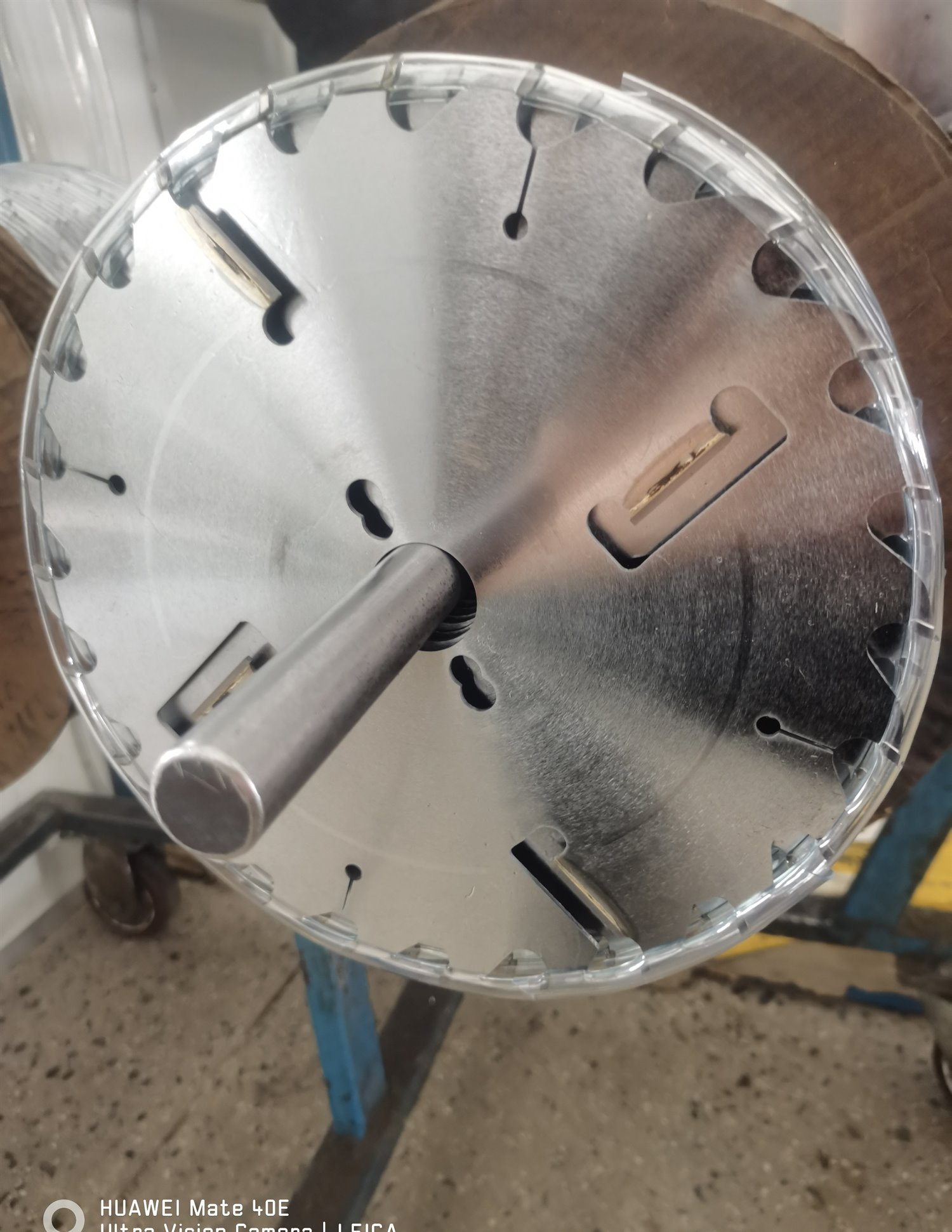
Aluminium blades run a high positive hook angle, larger gullets for chip clearance, and fewer, stronger teeth than a wood cross-cut blade. The geometry shears the chip instead of pushing it, and the gullet volume has to be enough for the continuous chip at production feed rates. A wood-cutting blade used on aluminium is the fastest way to destroy both the blade and the finish.
Heat, lubricant and feed rate
Three controls keep the cut cool. Lubrication - mist or flood, depending on the machine - reduces friction at the tooth face. Feed rate has to be high enough to take a real chip rather than rub, but low enough to avoid overloading the machine. And the blade must be sharp: a dull PCD tip on aluminium is a heat generator.
Thin-wall profiles and finish-critical work
Extrusion cutting adds a deflection problem: thin walls deform under cutting pressure. A fine-tooth blade with a stable plate and light, consistent feed produces the burr-free finish window fabricators need - and the surface-controlling geometry of the Kunlun teeth shape helps keep both cut faces clean.
Where PCD beats carbide on aluminium
High-volume extrusion plants and window-profile lines run continuously, and blade changes cost production hours. PCD tips hold their edge many times longer than carbide on aluminium, which removes blade changes from the maintenance plan and keeps finish quality constant across the run.
For low volumes or mixed materials, carbide remains cost-effective. The decision is the same economic calculation that applies to panel cutting: volume, finish standard and the cost of downtime.
ZHONGJIAN TECH manufactures PCD and carbide saw blades with the Kunlun teeth shape for woodworking, panel processing and aluminium cutting. Send your machine, material and size requirements to ferrytk898@gmail.com and we will confirm a blade specification and quotation.