Custom Tooth Profiles: What "Any Tooth Type" Means for Buyers
Suppliers claim any tooth type is possible. What that really means, what to specify, and how custom profiles affect lead time and cost.

"Any tooth type" is a common claim on saw blade supplier pages. It sounds like a promise that every cutting problem has a bespoke solution - and in a sense it is true: tooth profiles are ground to drawing, so any geometry that can be defined can be produced.
But the claim hides a set of trade-offs the buyer needs to understand: what a custom profile costs, how long it takes, and which problems are worth a new profile versus a stock blade.
The standard profiles, and what they do
Most cutting jobs are served by a handful of established geometries. Flat-top grinds clear chips efficiently in ripping. Alternate top bevel grinds shear cleanly across grain and on laminated faces. Triple-chip grinds combine a flat raker with chamfered cutters for hard materials and composites. And stepped, surface-controlling profiles - the family the Kunlun teeth shape belongs to - add support at the cut surface for scoring-saw-free panel cutting.
Knowing where a stock profile lands tells you whether a custom tooth is really needed, or whether the right stock geometry plus a different tooth count, kerf or tip grade would solve the problem.
When a custom profile makes sense
Three situations justify the cost. A machine imposes a geometry that stock blades cannot meet - unusual arbor, unusual depth, unusual feed. A material behaves unlike anything the stock range was designed for. Or a production problem persists across several stock profiles, which indicates the geometry itself is wrong for the job.
Custom profiles also matter when a blade must work across an unusual material mix - for example, cutting both aluminium and composite on the same line. The profile has to compromise intelligently, and that compromise is a design exercise, not a catalog pick.
What to specify
A custom profile order needs: the tooth geometry (drawing or a clear description), tip material and grade, diameter, kerf, plate thickness, bore, tooth count, the material mix, and the machine. Add what the current blade does badly - chipping, burning, deflection - because the failure pattern often changes the geometry recommendation.
Cost and lead time
Custom grinding requires a setting, a test piece and an approval step before production. Expect a longer first lead time and a higher unit cost than a stock blade; second and third orders are faster because the profile is on file. For production programs, that is usually worth it - a custom profile that fits the job pays back through blade life and edge quality.
A custom tooth is an engineering decision, not a marketing upgrade: only spend it where geometry is the constraint.
Kunlun Teeth Shape: Scoring-Saw-Free Panel Cutting with Cleaner Edges
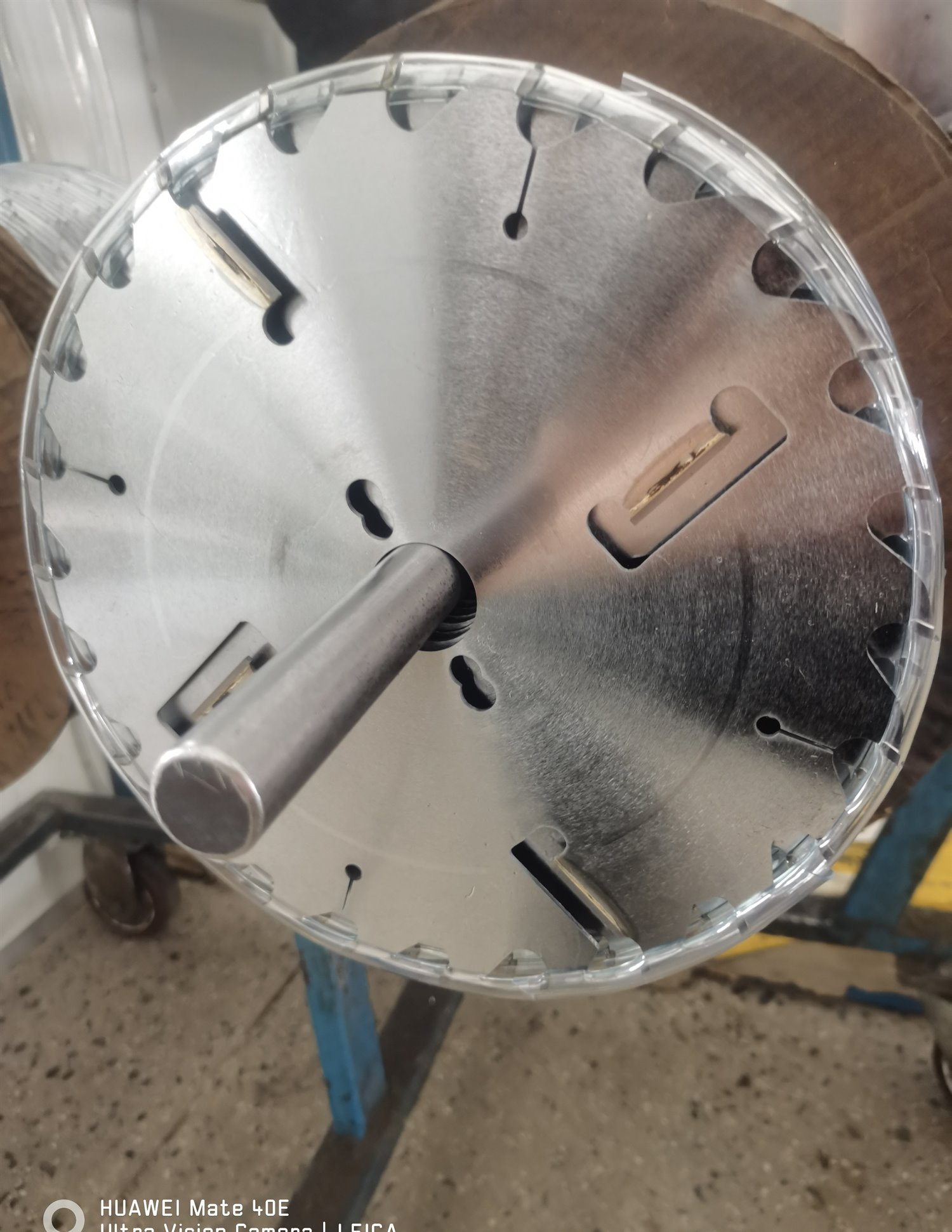
The Kunlun teeth shape is a conical (step) tooth profile that performs preliminary trimming on panel edges with a single blade, enabling scoring-saw-free panel cutting with cleaner edges. It greatly minimizes edge chipping, rough burrs and notch tearing, eliminates uneven cutting edges caused by edge chipping, and delivers a flawless finish on single-sided or double-sided panels without a scoring saw.
ZHONGJIAN TECH manufactures PCD and carbide saw blades with the Kunlun teeth shape for woodworking, panel processing and aluminium cutting. Send your machine, material and size requirements to ferrytk898@gmail.com and we will confirm a blade specification and quotation.