From Drawing to Delivery: How a Custom Saw Blade Order Works
What actually happens between sending a drawing and receiving blades: engineering review, first article, production and acceptance explained step by step.

Sending a drawing and waiting for blades can feel like a black box. In reality, a well-run custom blade order follows a predictable sequence - and knowing the sequence tells you what to prepare, what to expect and when to flag a problem.
Step 1: Enquiry and engineering review
The order starts with your requirement: a drawing, a sample, or a description of the machine and material. A competent supplier reviews manufacturability before quoting - flagging tolerances that cannot be held, edge angles that conflict with the steel grade, or dimensions that do not fit the machine interface. This is the cheapest stage to correct anything.
Step 2: Quotation and specification
The quotation should state the blade specification explicitly: material, hardness range, dimensions and tolerances, edge geometry, quantity, price, lead time and Incoterm. If any of those is missing, the quote is not yet comparable with another supplier's.
Step 3: Drawing approval
For custom work, production begins with a confirmed drawing - yours, or one the supplier drafts from a sample. Approving it in writing prevents the most expensive failure mode in custom blade supply: producing exactly what was described, if not what was needed.
Step 4: First article
A first article - one blade, or a small batch - is produced and checked against the drawing and the application. Fit on the machine, cut quality and dimensions are verified. Approving the first article is the point of no return: after it, the batch is a manufacturing task, not a design task.
Step 5: Production and inspection
Batch production runs with in-process inspection: hardness testing, dimensional checks and edge inspection. Where the specification demands it, records accompany the shipment. Ask in advance what documentation will ship with the blades.
Step 6: Delivery and acceptance
The shipment arrives with invoice, packing list and quality documents. Goods-in inspection (dimensions, flatness, tooth condition) confirms what was ordered - and closes the loop that started with the enquiry.
What to prepare on your side
A complete drawing or sample, the machine details, the material being cut and its condition, the edge or finish standard, and quantity and delivery expectations. That package is what turns a multi-week back-and-forth into a single quotation.
Specifying a Kunlun Teeth Shape Blade
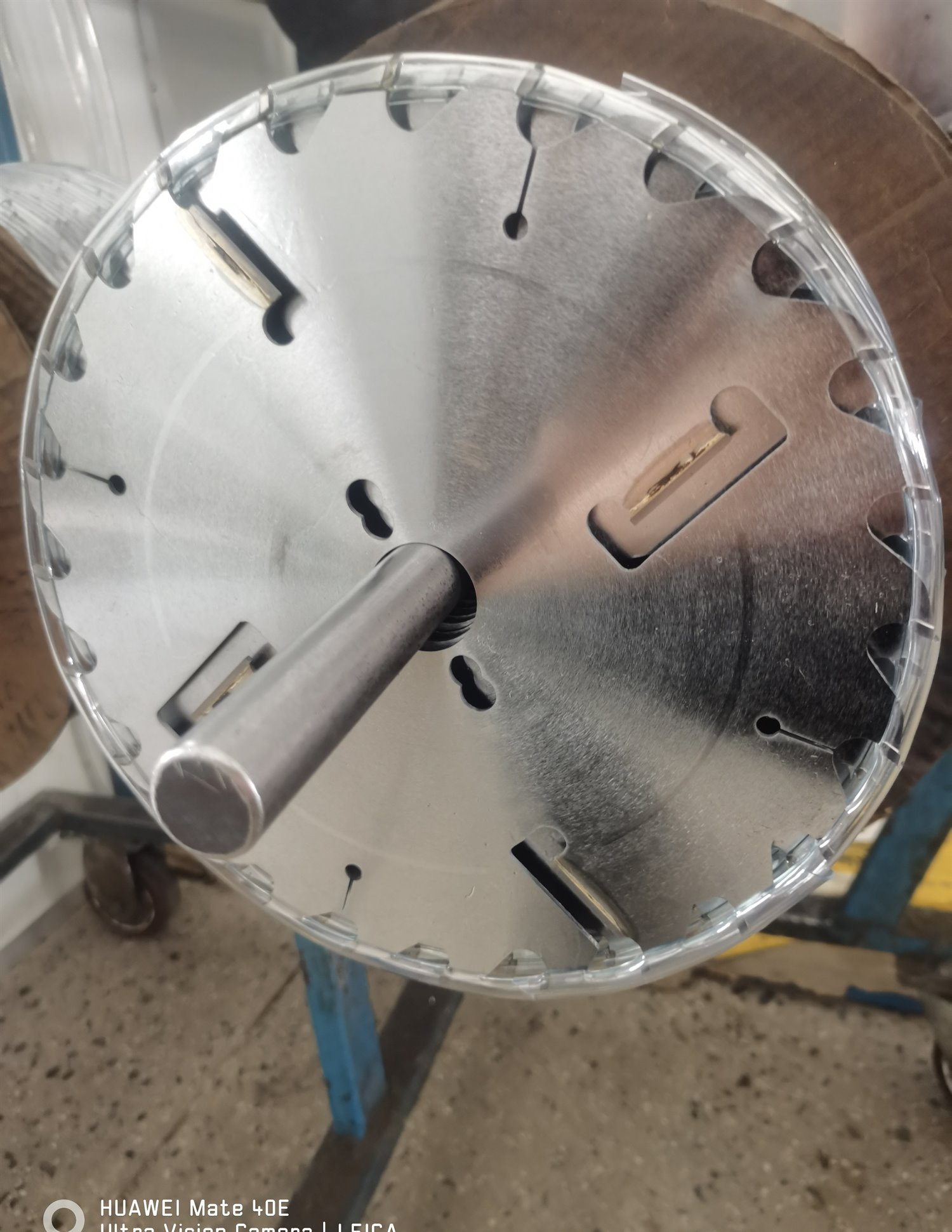
If the order is for a Kunlun teeth shape blade, the drawing approval stage should also confirm the tooth profile and the panel faces it will cut. The stepped geometry is the reason the blade can deliver scoring-saw-free panel cutting with cleaner edges - one conical (step) saw blade performing preliminary trimming, minimizing edge chipping, rough burrs and notch tearing on single-sided or double-sided panels. Approving that profile before production is what makes the first article predictable.
ZHONGJIAN TECH runs this sequence for every custom saw blade program - engineering review, drawing approval, first article and documented production. Send your requirements to ferrytk898@gmail.com to start an enquiry.