Cutting for Wood
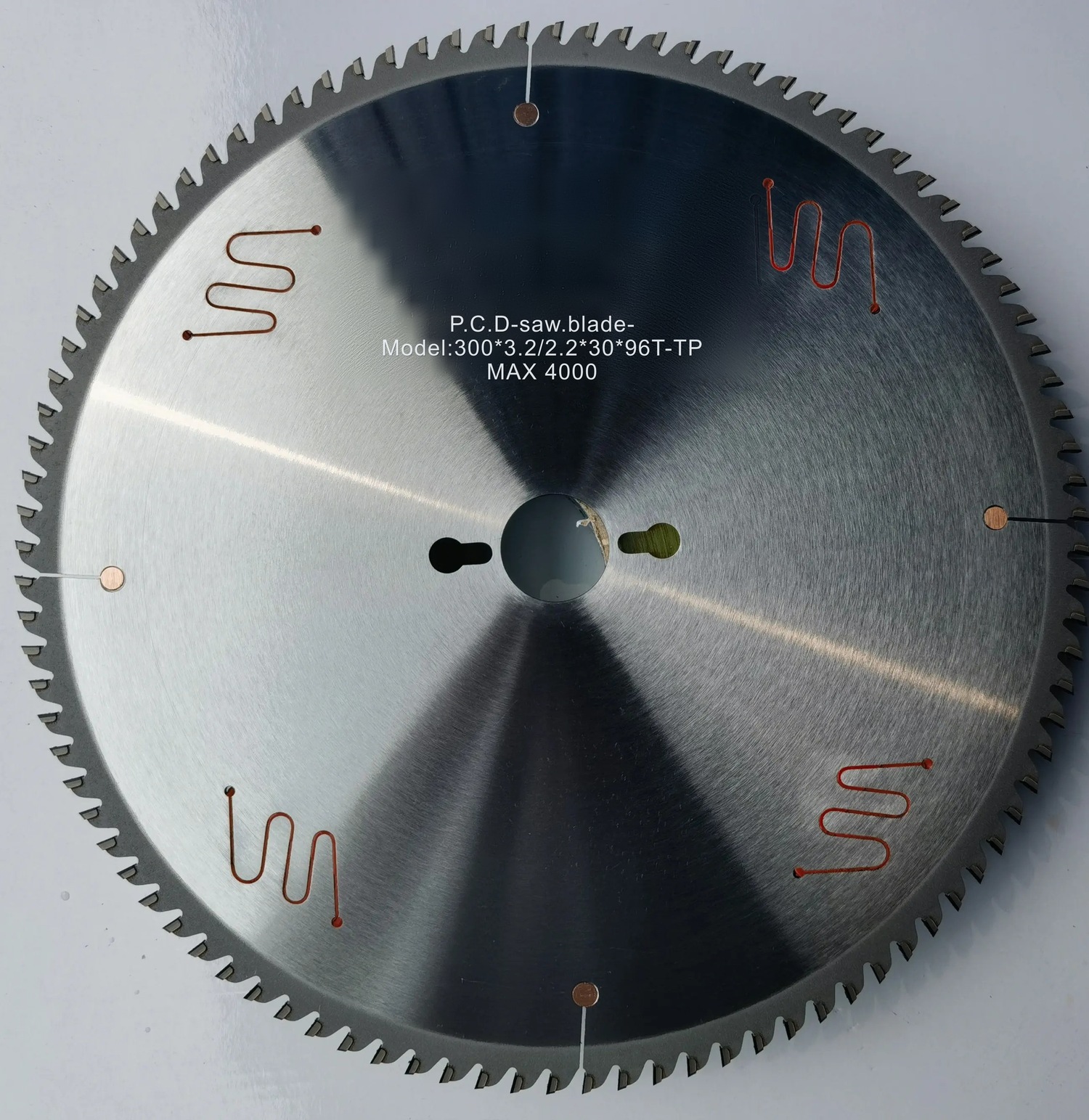
PCD 300 x 3.2/2.2 x 30 x 96T-TP Circular Saw Blade for Melamine Panel Sizing
PCD circular saw blade 300 x 3.2/2.2 x 30 mm, 96 teeth, TP profile. Cuts double-sided melamine chip-free without a scoring saw on panel and beam saws.
Specifications
- Outer Diameter
- 300 mm
- Kerf
- 3.2 mm
- Plate Thickness
- 2.2 mm
- Bore
- 30 mm
- Teeth
- 96T
- Tooth Geometry
- TP (trapezoidal-flat, triple chip grind)
- Tip Material
- PCD (polycrystalline diamond)
- Application
- Melamine-faced chipboard, MDF, HPL and laminated panel sizing on panel saws and beam saws
- Catalogue No.
- PCD300*3.2/2.2*30*96T-TP
PCD 300 x 3.2/2.2 x 30 x 96T-TP Circular Saw Blade for Melamine Panel Sizing — catalogue designation PCD300*3.2/2.2*30*96T-TP. Dimensions are outer diameter 300 mm with a 3.2 mm kerf and 2.2 mm plate, 30 mm bore and 96T cutting edges in TP (trapezoidal-flat, triple chip grind) geometry.
PCD circular saw blade 300 x 3.2/2.2 x 30 mm, 96 teeth, TP tooth profile. Cuts double-sided melamine and laminated panels chip-free without a scoring saw on panel saws and horizontal beam saws.
Applications
Cutting: Melamine-faced chipboard, MDF, HPL and laminated panel sizing on panel saws and beam saws.
Why this specification
The combination of 300 mm diameter and 96T teeth sets the chip load per tooth at a given feed rate. The 3.2 mm kerf and 2.2 mm plate are chosen together: a thinner plate saves material but reduces how much tension the body can carry, so the plate thickness on this size is set as the practical minimum for stable running at production speed.
The tips are PCD (polycrystalline diamond). Diamond tips hold an edge through abrasive panel materials far longer than carbide, which is what makes a blade at this price point economic on a machine that runs all week.
Specification
Outer diameter 300 mm | Kerf 3.2 mm | Plate thickness 2.2 mm | Bore 30 mm | Teeth 96T | Tooth geometry TP (trapezoidal-flat, triple chip grind) | Tip material PCD (polycrystalline diamond).
Ordering notes
Bore size and pin holes must match the machine arbor, and the maximum speed marked on the blade must not be exceeded. If you are replacing an existing blade, the simplest order reference is the marking stamped on the old blade plus the machine make and model.
Diameter and tooth count set the cut; kerf and plate decide how much material and spindle power it costs.
ZhongJian Tech manufactures PCD diamond and TCT carbide circular saw blades in Futian Town, Anyuan District, Pingxiang City, Jiangxi Province, China, to customer drawings and standard specifications. Send the diameter, kerf, bore, tooth count and the machine you run, and we will confirm the specification and quotation. Email ferrytk803@gmail.com, phone / WhatsApp +86 13617995900.
Frequently asked questions
Will a 300 mm blade with a 30 mm bore fit my saw?
The arbor of a 300 mm blade has to match in two places: the 30 mm bore and the pin-hole pattern. Check both against the machine before ordering — the bore is easy to measure, and the pin holes are where machines of the same brand often differ. If your arbor is different, this tooth geometry is built in other bores and pin configurations to order, so the specification is moved to your machine rather than the other way round.
96T on a 300 mm blade — what does that limit?
Tooth count sets the chip load per tooth at a given feed rate. 96T on a 300 mm blade is a general-purpose count for cross-cutting and panel sizing. A higher count leaves a cleaner edge and a slower practical feed; a lower one cuts faster and leaves a rougher edge. The geometry on this blade is TP (trapezoidal-flat, triple chip grind).
Can the bore, kerf or tooth count be changed?
Yes. Diameter, kerf, plate thickness, bore, pin holes and tooth count are all made to the machine and to the material being cut. When replacing a worn blade, the fastest route is a photograph of the marking stamped on the old blade plus the machine make and model — the quotation is then built on that specification rather than on the nearest stock size.
Why PCD rather than carbide here?
PCD holds its edge through abrasive material far longer than carbide, which is why it is specified for melamine-faced chipboard, MDF, HPL and laminated panel sizing on panel saws and beam saws. It costs more per blade and is the cheaper option per cut wherever the material is abrasive enough to wear a carbide edge out quickly. On clean softwood or short runs, carbide stays the more economical choice.
What should I quote when I inquire?
PCD300*3.2/2.2*30*96T-TP, plus the quantity and the machine make and model. Those three are enough to confirm the specification, the minimum quantity for the size and the production lead time in the quotation.