
Cutting for Cement
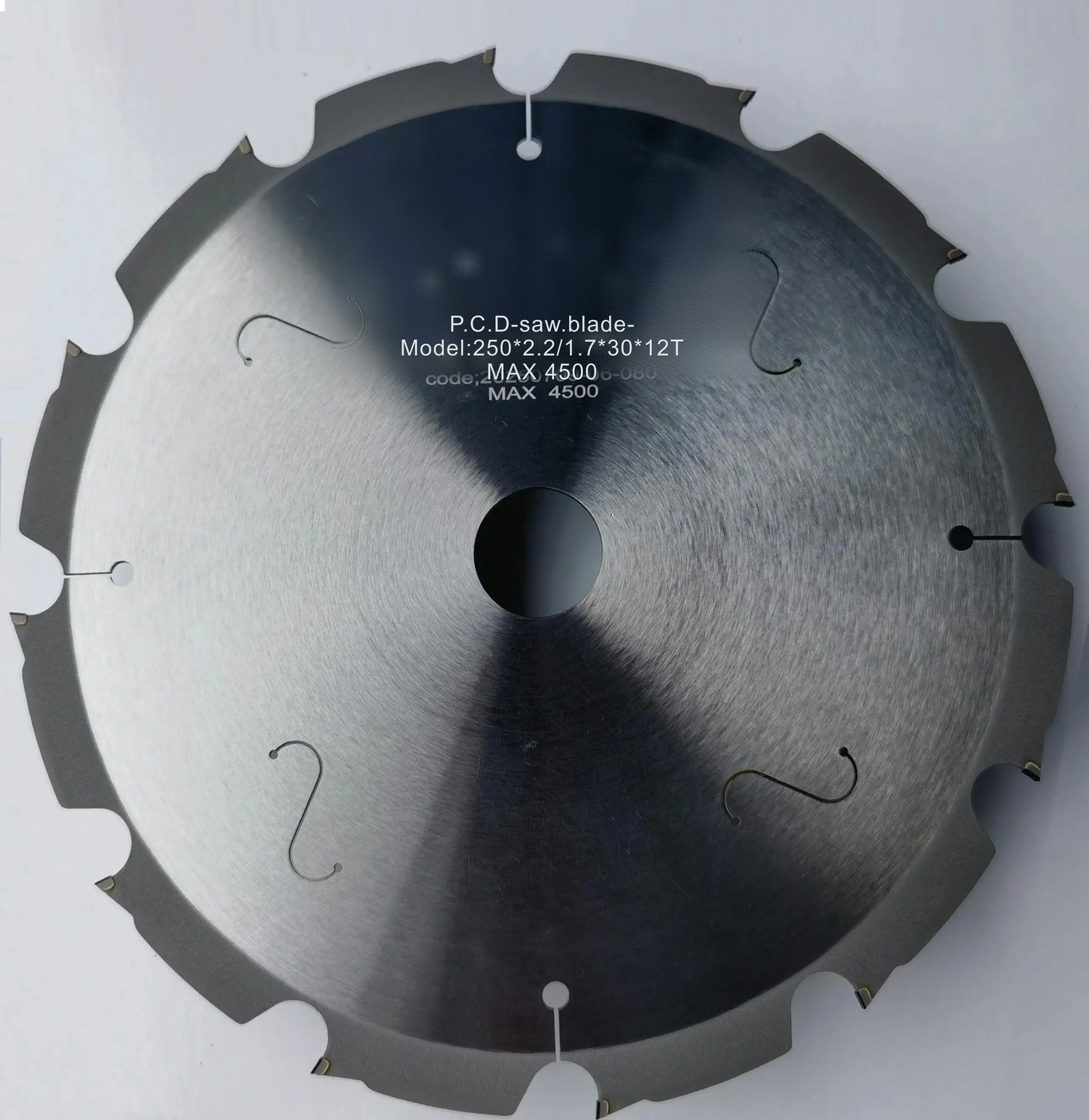
PCD 250 x 2.2/1.7 x 30 x 12T Circular Saw Blade for Cement Board and Fiber Cement
PCD diamond circular saw blade 250 x 2.2/1.7 x 30 mm, 12 teeth, for fiber cement board, cement particle board, concrete tile and engineered stone.
Specifications
- Outer Diameter
- 250 mm
- Kerf
- 2.2 mm
- Plate Thickness
- 1.7 mm
- Bore
- 30 mm
- Teeth
- 12T
- Tooth Geometry
- Flat top with PCD tip, deep gullet
- Tip Material
- PCD (polycrystalline diamond)
- Body Material
- Hardened and tensioned alloy steel
- Cutting Material
- Fiber cement board, cement particle board, concrete tile, engineered stone, gypsum board
- Machine
- Hand-held cutter, table saw, plunge saw, bridge saw
- Max Speed
- 5,000 RPM
- Customization
- Diameter, bore and tooth count produced to machine requirements
Fiber cement and cement particle board are among the most abrasive sheet materials in a workshop. The cement matrix is full of silica and mineral filler, and a tungsten carbide edge that lasts months in MDF will be worn out by cement board in a shift or two. This is the material where polycrystalline diamond stops being an upgrade and becomes the only sensible choice.
This blade is 250 x 2.2/1.7 x 30 mm with 12 PCD-tipped teeth. The low tooth count and deep gullets are deliberate: cement board produces a large volume of fine, abrasive dust, and the blade has to clear it without packing the gullets.
Why PCD rather than TCT on cement
PCD is a layer of synthetic diamond sintered onto a carbide substrate. Diamond is far harder than the silica in cement, so the wear mechanism that destroys a carbide tooth simply does not apply. The result is a blade that keeps its edge for many times the life of carbide and, more importantly, keeps the same cut quality from the first cut to the last.
A dull carbide blade on cement board does not just cut slowly - it starts to rub, which raises the dust temperature and load on the saw, and produces a chipped, ragged edge that has to be filled before finishing. On facade and cladding work that is a visible defect.
Tooth geometry for cement board
A flat-top PCD tooth with a deep gullet shears through the board and carries the dust out of the cut. The 12-tooth count on a 250 mm blade gives a fast, aggressive cut suitable for sheet goods, and the 2.2 mm kerf keeps the cut narrow so the blade does not overheat in long rip cuts.
For a finer edge on decorative face panels, a higher tooth count version is available; for maximum speed on thick board, a lower count is faster but leaves a rougher edge.
Cutting technique and dust control
Fiber cement should be cut with the finished face down wherever possible, so that any breakout happens on the hidden side. Support the board on both sides of the cut so it cannot sag and pinch the blade. Do not force the feed - let the teeth cut at their own rate, and keep the saw moving at a steady speed.
Dust extraction matters more here than on wood. Cement dust is a respiratory hazard and it is abrasive enough to wear out a saw in a short time. Use a saw with dust extraction and a suitable filter, and wear respiratory protection regardless.
Wet or dry cutting
PCD blades of this type are normally run dry. Some bridge saws and hand cutters are designed for wet cutting of stone and concrete, and the same blade can be used with water cooling, which extends life further and eliminates airborne dust. Follow the machine manufacturer recommendation.
What this blade cuts
Fiber cement cladding and siding board, cement particle board, concrete roof tile, cement fibre sheet, gypsum and fibre-reinforced board, engineered stone and some concrete products. It is not intended for reinforced concrete with rebar, or for abrasive masonry where a segmented diamond blade is the correct tool.
Ordering the correct blade
The machine sets the diameter and the bore; the board thickness and the finish requirement set the tooth count. If you are replacing a blade, send the old blade dimensions and the board you are cutting. We also build this PCD family in other diameters with 30 mm and 25.4 mm bores.
On fiber cement, the blade is not the consumable - the dust is the problem. Choose the blade that keeps the cut clean and the gullets clear.
ZhongJian Tech manufactures PCD diamond and TCT carbide circular saw blades in Futian Town, Anyuan District, Pingxiang City, Jiangxi Province, China. Send the material you cut, the machine and the blade size you run now, and we will confirm the specification and quotation. Email ferrytk803@gmail.com, phone / WhatsApp +86 13617995900.
Frequently asked questions
What do I check before ordering?
This blade is 250 mm with a 30 mm bore. Match three things against the machine: the outer diameter against the saw’s capacity, the bore and pin holes against the spindle, and the tooth geometry against the section being cut. The bore is easy to measure; the pin holes are where machines of the same brand often differ. Where the arbor differs, the same tooth geometry is built to your spindle rather than you adapting the machine.
What does a 12T count change in the cut?
Tooth count is set against the thickness of the material being cut, not against the blade diameter alone. A finer count suits thin sheet and trim cuts; a coarser count with a deep gullet clears the abrasive dust, which is what wears a blade out fastest in cement board and stone. This blade is flat top with PCD tip, deep gullet. Other counts are ground to order.
What speed should the saw run at?
5,000 RPM. Treat that as the limit rather than the target: running above it heats the tips, blunts them faster and makes the cut wander. If the saw has no rating for the blade size, start low and raise the speed only while the chip comes off clean and the finish holds.
Which machine is this blade built for?
Hand-held cutter, table saw, plunge saw, bridge saw. Send the make and model with the order and the bore, pin holes and tooth count are confirmed against it before production.
Which materials does it cut?
Fiber cement board, cement particle board, concrete tile, engineered stone, gypsum board. Stay inside that range: a blade run in harder or more abrasive material than it was ground for loses its edge quickly, and the cut quality drops before the edge visibly fails.
What should I quote when I inquire?
PCD 250 x 2.2/1.7 x 30 x 12T Circular Saw Blade for Cement Board and Fiber Cement — plus the quantity and the machine make and model. Those three are enough to confirm the specification, the minimum quantity for the size and the production lead time in the quotation. When replacing a worn blade, a photograph of the marking stamped on the old blade shortens the check further.