Oct 5, 2026
Rubber Processing: Choosing Blades for Elastomer Cutting
Rubber's elasticity punishes cutting edges. Learn what blade geometry and steel handle bales, sheets and granulation work.
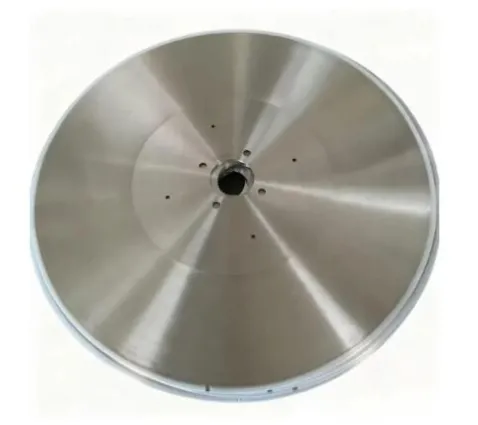
Rubber is one of the most perverse materials to cut. Press a sharp edge into it and the material deforms away from the blade, then snaps back at the moment of separation - leaving a ragged, dimensionally unpredictable cut. Add fillers such as carbon black and mineral compounds that abrade the edge, and heat from friction that softens it, and rubber cutting becomes a small engineering problem rather than a simple slicing task.
Why rubber behaves this way
Elasticity is the root cause: the material prefers to stretch rather than separate, so the blade must initiate and complete the cut without giving rubber time to escape. That favors very sharp, fine edges for clean cuts, or a different cutting principle entirely - high speed, extreme sharpness, or cutting in cooled conditions where the material becomes rigid enough to shear cleanly. Abrasive fillers wear edges quickly, and cutting friction raises edge temperature, which accelerates wear further and can alter material at the cut face.
Matching blades to the process
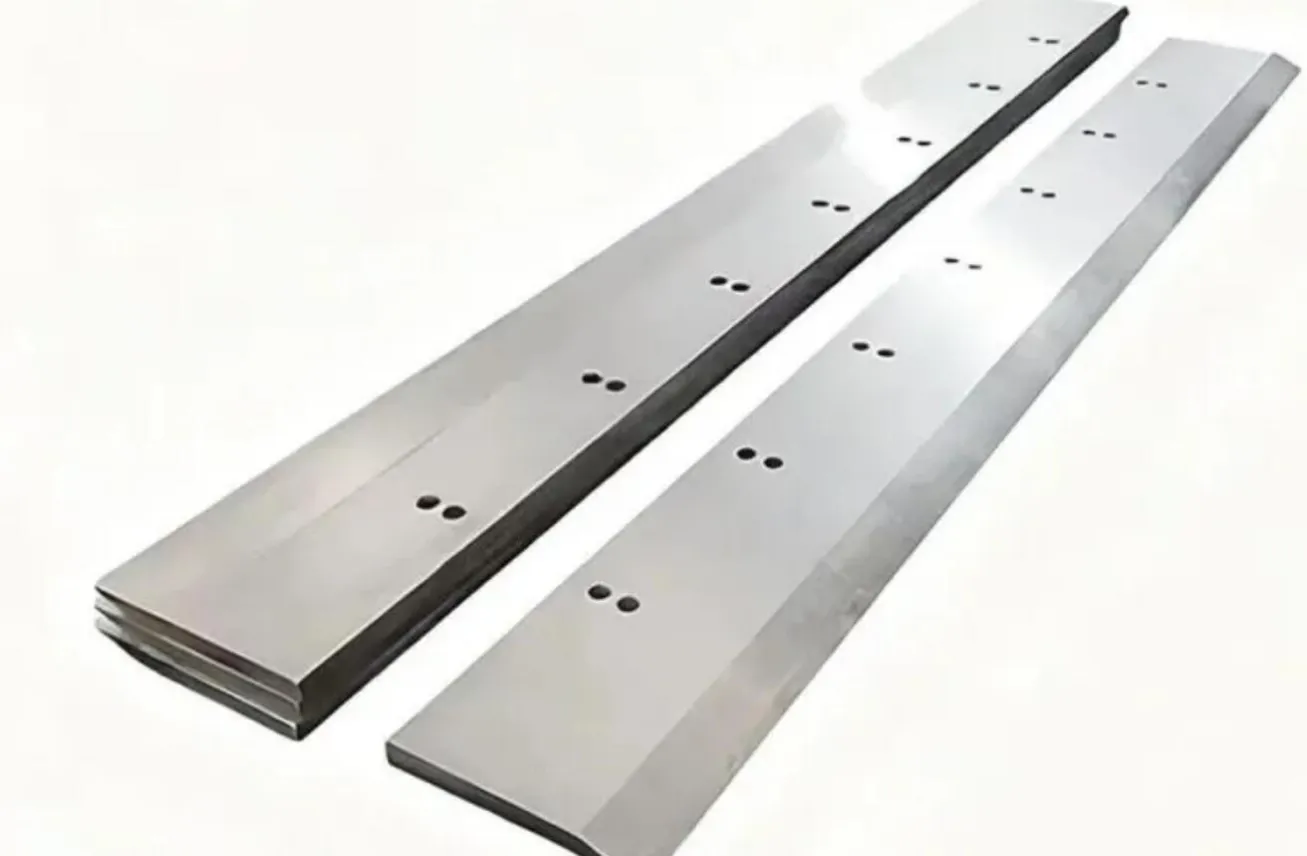
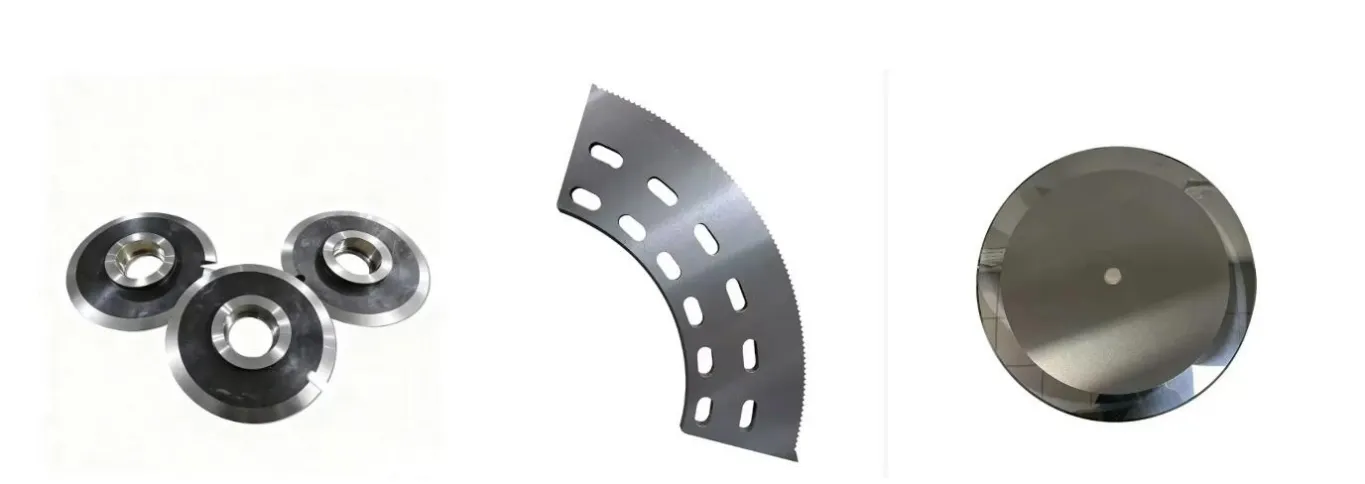
Different rubber operations need different tools. Bale cutting - reducing incoming bales to manageable slabs - is a brute-force operation where thick, tough blades with a robust edge geometry survive the shocks of foreign objects. Slicing and splitting cured sheets switches the requirement to precision: flatness, parallelism and fine edge condition decide whether the sheet keeps its gauge. Granulation and reclaim lines shred vulcanized parts and offcuts, where shock resistance and wear life again lead, and screens set the final particle size.
Blade selection checklist
For any rubber application, work through five points: the rubber compound and its filler content, which sets the abrasion rate; the process step and required cut quality; the machine's speed and mounting system, since the blade must fit exactly; the edge specification - fine for clean cuts, robust for high-impact work; and the maintenance plan, because re-sharpening frequency and geometry control decide real cost per ton. Where the application is genuinely difficult, discuss with the blade manufacturer whether a different cutting approach - speed, lubrication or temperature - changes the economics.
Ordering and upkeep
Send the rubber type, the machine and the process step, along with a drawing or sample blade. Expect the specification discussion to be more specific than for paper or plastic - and treat the wear pattern as diagnostic: edge rounding points to abrasion, chipping to impact or contamination, heat discoloration to friction and feed speed. ZHONGJIAN TECH manufactures machine knives and cutting blades for rubber and industrial processing. Contact ferrytk898@gmail.com with your application details.