Sep 27, 2026
Industrial Knife Hardness: How to Choose the Right HRC for Your Application
Industrial Knife Hardness: How to Choose the Right HRC for Your Application
Industrial Knife Hardness: How to Choose the Right HRC for Your Application
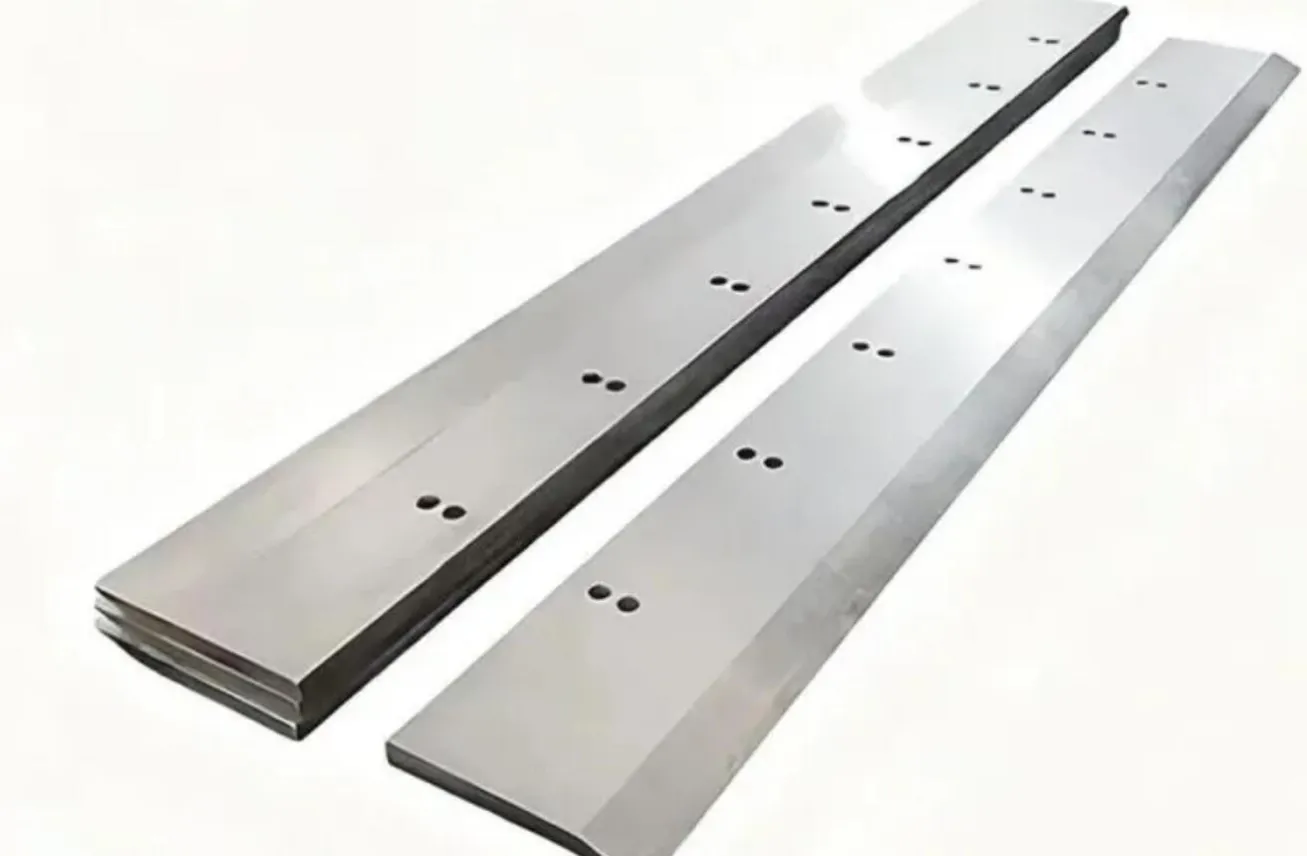
Hardness is one of the most important factors affecting the performance and service life of an industrial knife. When ordering custom blades, customers often specify a hardness requirement in HRC. However, choosing the right hardness involves more than simply selecting the highest possible value.
At Zhongjian Tech, we help customers balance hardness with toughness, wear resistance, and real-world cutting conditions. The ideal hardness depends on the blade material, application, cutting conditions, and the balance between wear resistance and toughness.
What Does HRC Hardness Mean?
HRC stands for Rockwell Hardness C scale. It is commonly used to measure the hardness of hardened tool steels and industrial knives.
A higher HRC value generally indicates a harder material. However, hardness alone does not determine the overall performance of a blade.
Industrial knives need to balance several properties, including:
- Hardness
- Wear resistance
- Toughness
- Edge retention
- Resistance to chipping and cracking
This is why the correct hardness is more important than simply choosing the highest hardness.
Why Is Hardness Important for Industrial Knives?
Hardness has a direct influence on how a blade performs during continuous cutting operations.
Wear Resistance
A harder blade generally provides better resistance to wear. This can help the cutting edge remain effective for longer periods, especially when processing abrasive materials.
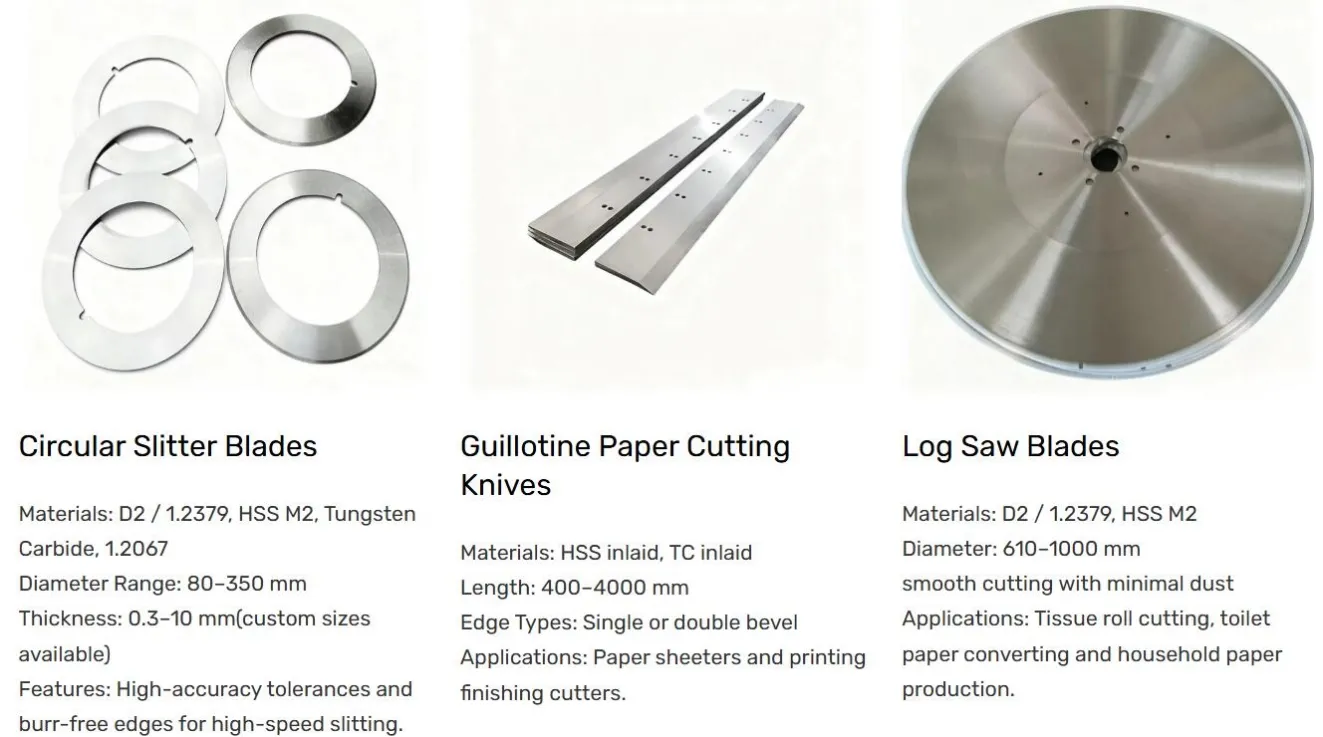
For applications such as paper converting, plastic recycling, and woodworking, good wear resistance can significantly reduce the frequency of blade replacement or sharpening.
Edge Retention
Hardness also affects how well a cutting edge maintains its geometry during operation.
When the hardness is appropriate for the application, the blade can maintain a stable cutting edge and provide more consistent cutting performance.
Toughness and Chipping Resistance
However, making a blade harder does not always make it better.
If a blade is excessively hard for a particular application, it may become more susceptible to chipping or cracking when exposed to impact or shock loads.
For heavy-duty applications, sufficient toughness can be just as important as hardness.
Is Higher Hardness Always Better?
No.
This is one of the most important points when selecting industrial knives.
A blade that is too soft may wear quickly, while a blade that is too hard may become brittle.
The optimal hardness is a balance between wear resistance and toughness.
For example, a precision slitting application may prioritize edge retention and dimensional stability, while a heavy-duty recycling application may require greater toughness to withstand impact.
The correct hardness should therefore be determined according to the actual working conditions rather than a single standard value.
Hardness Considerations for Common Industrial Knife Materials
Different materials have different hardness characteristics and should not be treated in exactly the same way.
D2 / DIN 1.2379
D2 is a widely used tool steel for industrial knives because of its high wear resistance.
It is commonly used for:
- Paper cutting
- Plastic processing
- Recycling applications
- General industrial knives
The appropriate hardness depends on blade geometry, application, and impact conditions.
HSS / M2
High-speed steel such as M2 is known for its high hardness and excellent edge retention.
It is suitable for demanding cutting applications where maintaining a sharp cutting edge over long production runs is important.
9CrSi
9CrSi is commonly used for general industrial cutting applications where a balance between hardness, wear resistance, and cost is required.
It can be a practical choice for certain paper and general-purpose cutting applications.
420 and 440A Stainless Steel
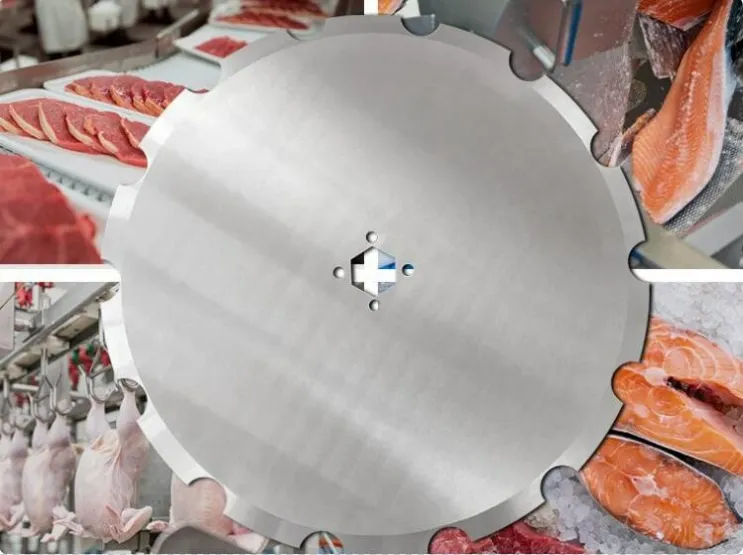
Stainless steels such as 420 and 440A are often selected for applications where corrosion resistance is important, including food processing.
The final hardness should be selected together with the required corrosion resistance, toughness, and cutting performance.
Tungsten Carbide
Tungsten carbide is different from conventional tool steels.
Its performance is normally specified according to carbide grade and properties rather than HRC hardness.
Tungsten carbide offers extremely high hardness and wear resistance, making it suitable for demanding applications such as lithium battery material slitting, abrasive materials, and other high-precision cutting operations.
How Application Conditions Affect Hardness Selection
Material hardness is only one part of the equation.
When selecting the appropriate blade hardness, manufacturers should also consider:
Material Being Cut
Different materials create different levels of wear and cutting force.
Abrasive materials may require higher wear resistance, while materials that create impact loads may require greater toughness.
Material Thickness
Thicker or stronger materials can generate higher cutting forces. The blade must have sufficient toughness to withstand these forces without chipping or cracking.
Cutting Speed
High-speed cutting can increase heat generation and wear. Blade material and hardness should therefore be selected according to the actual operating conditions.
Machine Setup
Blade alignment, clearance, overlap, and machine stability can all affect blade performance.
Even a blade with the correct hardness may perform poorly if the machine is not properly adjusted.
Impact and Shock
Applications involving impact require a careful balance between hardness and toughness.
In these cases, selecting the hardest possible blade may actually increase the risk of edge damage.
How Is Industrial Knife Hardness Checked?
After heat treatment, hardness is normally checked using a hardness testing machine.
For steel industrial knives, Rockwell hardness testing is commonly used to verify whether the blade meets the specified hardness requirement.
Quality control may include:
- Material verification
- Heat treatment records
- Hardness testing
- Flatness inspection
- Dimensional inspection
- Cutting edge inspection
Consistent hardness is particularly important when producing multiple blades for the same machine.
Key Takeaways
- Higher hardness does not always mean better blade performance.
- The ideal hardness depends on the material, application, and cutting conditions.
- Higher hardness can improve wear resistance and edge retention.
- Excessive hardness may increase the risk of chipping or cracking.
- D2, HSS, 9CrSi, and stainless steels require different hardness considerations.
- Tungsten carbide is normally specified by carbide grade and properties rather than HRC.
- Proper heat treatment is essential for achieving consistent blade hardness.
FAQ – Industrial Knife Hardness
What hardness is best for industrial knives?
There is no universal hardness that is best for every industrial knife. The correct hardness depends on the blade material, application, cutting conditions, and required balance between wear resistance and toughness.
Is a harder industrial knife better?
Not necessarily. Higher hardness can improve wear resistance, but excessive hardness may reduce toughness and increase the risk of chipping or cracking.
How is industrial knife hardness measured?
For many hardened steel knives, hardness is measured using the Rockwell C scale and expressed as HRC.
Can the hardness of an industrial knife be customized?
Yes. For many tool steel blades, the heat treatment process can be adjusted to achieve a specified hardness range according to the application and material.
Does hardness affect blade life?
Yes. Proper hardness can improve wear resistance and edge retention. However, blade life also depends on material selection, edge geometry, grinding quality, machine setup, and operating conditions.
Conclusion
Choosing the right hardness is essential for achieving reliable industrial knife performance. While higher hardness can improve wear resistance and edge retention, excessive hardness may reduce toughness and increase the risk of chipping or cracking.
At Zhongjian Tech, we recommend selecting the appropriate blade material and heat treatment according to the actual application, rather than simply choosing the highest hardness available.
By considering the material being cut, blade geometry, cutting parameters, machine conditions, and required service life, manufacturers can develop industrial knives that provide a better balance of performance, durability, and cost.