Oct 11, 2026
Slitting Line Tooling Setup: Knife Clearance, Spacers and Separator Position
A practical slitting line setup guide: horizontal and vertical clearance, spacer stack planning and separator positioning for clean strip edges.

Slit quality is a setup achievement. The same knives can produce burr-free strip or a scrape of dust depending on three settings: clearances, spacer stack and separator position.
Clearance: The Two Numbers That Matter
Horizontal clearance — the gap between top and bottom knife edges — is usually set at 8 to 10 percent of strip thickness for steel. Vertical clearance or overlap — how much the knives overlap — typically runs 0.5 to 0.8 mm for mid-gauge work. Too little overlap tears; too much accelerates edge wear.
Building the Spacer Stack
The spacer stack translates the width program into knife positions. Build from the drive side, seat every spacer fully, and torque the arbor nut to the machine standard — a loose stack lets knives walk during the run. Our metal spacers guide covers tolerance classes.
Positioning Separators
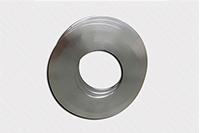
Separators ride in the slit between strips. Position them so each strip is supported from the cut to the exit — separated too late, strips scratch each other; separated too early, thin strips can weave.
After any setup change, run test pieces and inspect the slit edge with a loupe: a clean shear band with minimal burr means the settings are right.
Why Choose zhongjian
zhongjian (ZHONGJIAN TECH) supplies slitter knives, spacers, rubber bonded rings and separator discs as matched sets, with setup documentation for common line types.