Oct 4, 2026
Blade Selection for Organics Processing Lines
Food waste, garden waste and FOGO streams treat shredder and grinder blades differently. Learn how feedstock, contamination and stage decide blade specification.
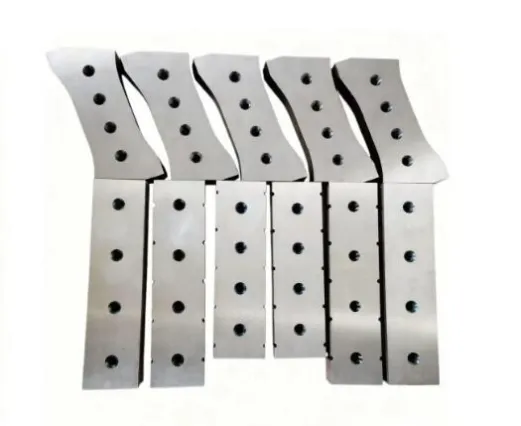
Organics processing is drawing serious investment across waste management and resource recovery. As facilities add capacity or upgrade existing lines, equipment performance, maintenance requirements and operating cost move to the top of the agenda - and for shredders and grinders, those three things run through the blades.
Organic waste, however, does not create one consistent cutting condition. Food residues, garden waste and mixed food-and-garden organics differ widely in moisture, fibre content, contamination and required output size. Wear resistance alone is not enough; blade selection must follow the feedstock, the processing stage, the equipment design and the replacement method.
Start with the feedstock
Before specifying replacement blades, define what actually enters the machine. Food organics are often wet and soft, and may carry salt, acids and cleaning residues that influence material selection. Green waste is fibrous - branches, leaves, roots and vines - with irregular size and density that create shock loads. Mixed FOGO combines both, so the cutting load varies through a single shift.
Contamination deserves its own line in the specification. Plastic film wraps around shafts and knives; string binds rotors; stones, glass and metal introduce impact and abrasion that no edge geometry can absorb. Facilities that screen incoming material can specify a lighter-duty blade; those that cannot should plan for the impact.
Match the blade to the processing stage
Primary shredding and secondary grinding are different jobs. Primary machines reduce bulky, irregular material and need blades that survive shock and wrapping. Secondary grinders target output size and put more emphasis on edge condition and repeatable cut quality. Blade thickness, edge geometry and the rotor or knife arrangement should be chosen per stage rather than carried over from one machine to the next.
Wear is not the only failure mode
In organics processing, blades fail in more ways than slow edge rounding. Fibrous material polishes and rounds cutting edges quickly; contamination chips them; heat from heavy friction can soften edges that were never given time to cool. When reviewing a wear pattern, separate the causes: uniform edge wear points to abrasion, local chips point to contamination, and wrapped, smeared material points to geometry or clearance issues.
Plan replacements around downtime
The business case for blades in this industry is really a downtime argument. A shredder or grinder that stops mid-shift strands the whole line, and emergency blade changes cost far more than planned ones. Track blade life in operating hours per set, watch throughput and output size for early wear signals, and keep a re-sharpened spare set ready per machine so a change is a scheduled task, not a crisis.
Specifying blades for your line
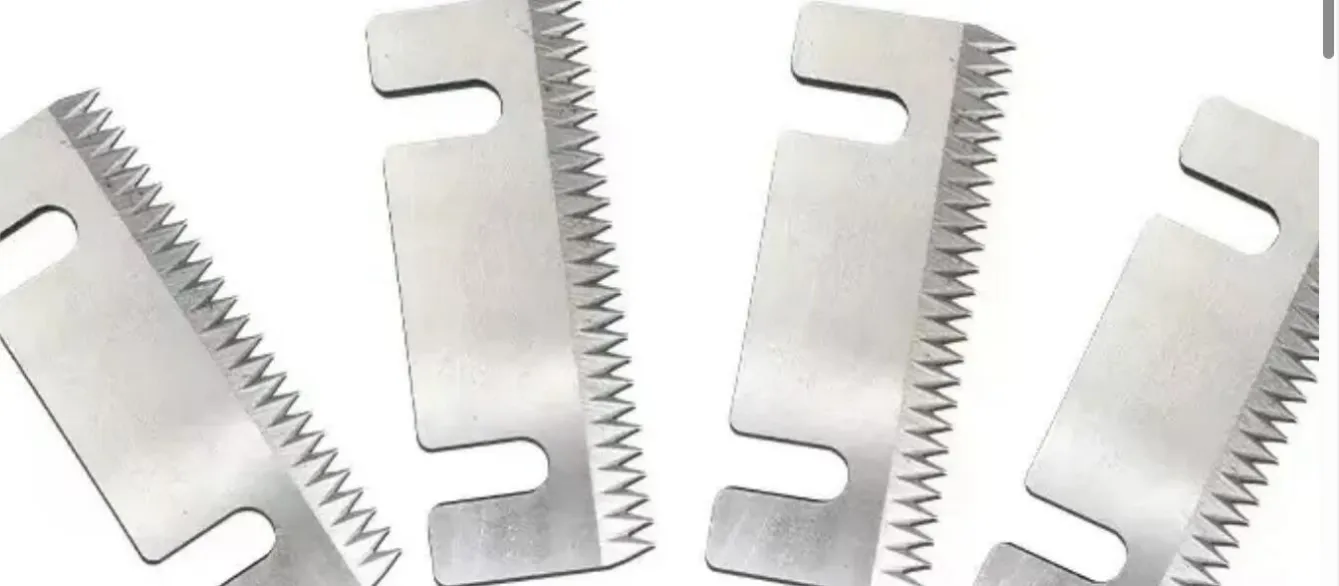
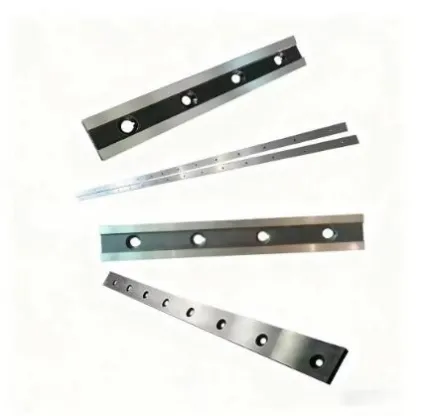
Send the feedstock description (including typical contamination), the machine model and processing stage, the target output size, and your current blade drawing or sample. ZHONGJIAN TECH produces industrial machine knives and shredder blades, and will confirm a material and geometry recommendation for your line. Contact ferrytk898@gmail.com with your requirements.