Oct 4, 2026
Industrial Potato Processing Blades: Going Beyond Sharpness
Blade choice affects strip quality, waste and uptime on potato processing lines. Learn how to specify blades for cutting, wear life and cleanability.
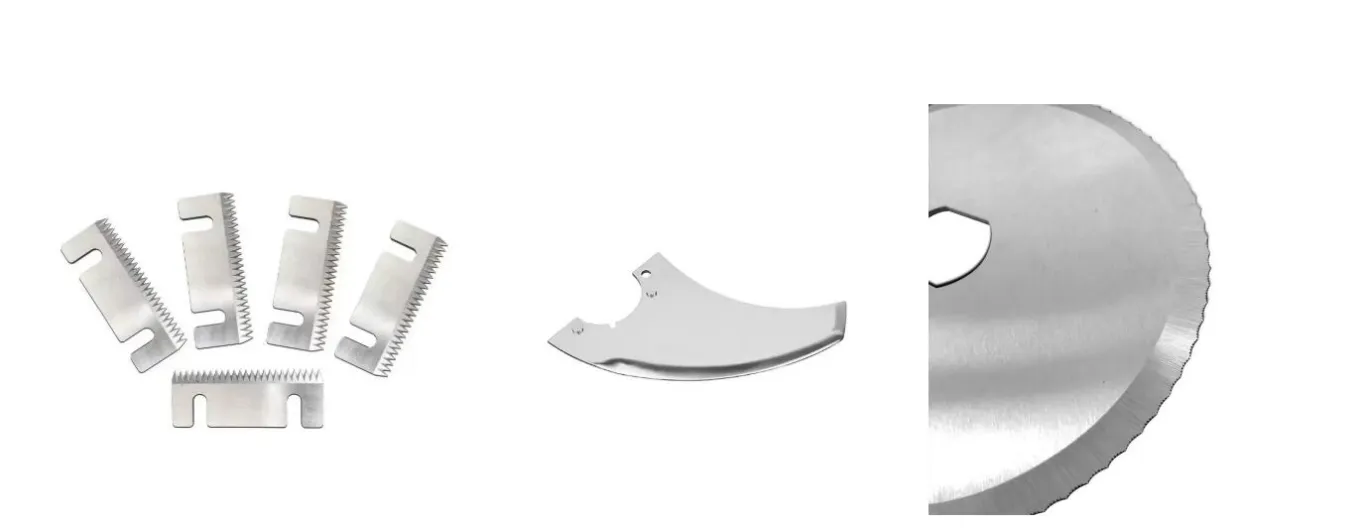
Potato processing is an industry built on volume. A single plant can run through hundreds of tonnes of potatoes a week, which means every blade in the line is working under constant load - cutting cold product at high speed, then facing a washdown before the next shift. In this environment, blade selection is not about finding the sharpest edge. It is about keeping strip and slice quality stable over long production runs.
This guide explains what actually decides performance on industrial potato processing lines: the raw product and the target cut, the machine interface, material and hardness, cleanability, and a realistic replacement plan.
Start with the product, not the blade
Potatoes are not a uniform input. Variety, size, growing conditions and storage time all change how the tuber behaves at the cutting station. Stored potatoes arriving at low temperature are harder and more brittle than warm product, which shifts cutting forces and edge loading. Pre-treatment steps such as peeling and blanching also change friction and starch release at the blade.
The target cut matters just as much. French fry strips, chips, flakes, cubes and wedges each load the blade differently. Strip width and length tolerances are set by the customer, and blade geometry - not machine speed - is the first variable that decides whether those tolerances can be held.
Match the blade to the machine interface
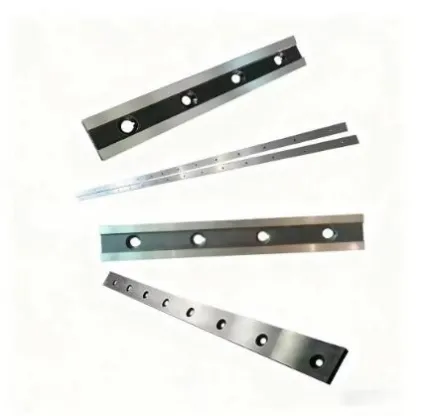
Potato cutters, slicers and dicers are built around a specific blade format: dimensions, mounting holes, clamping arrangement and edge angle. A blade that fits loosely or deflects under load cannot cut cleanly, no matter what steel it is made from. When specifying replacement blades, work from the machine drawing or a sample blade, and treat thickness tolerance and flatness as functional requirements rather than nice-to-haves.
Blade deflection deserves particular attention. On high-speed slicers, a blade that flexes under cut pressure produces strips with ragged edges and inconsistent dimensions - a defect that shows up downstream in grading and packaging. A stiffer blade body, or a thicker gauge where the machine allows it, is often the most effective quality fix.
Material and hardness: a balance, not a maximum
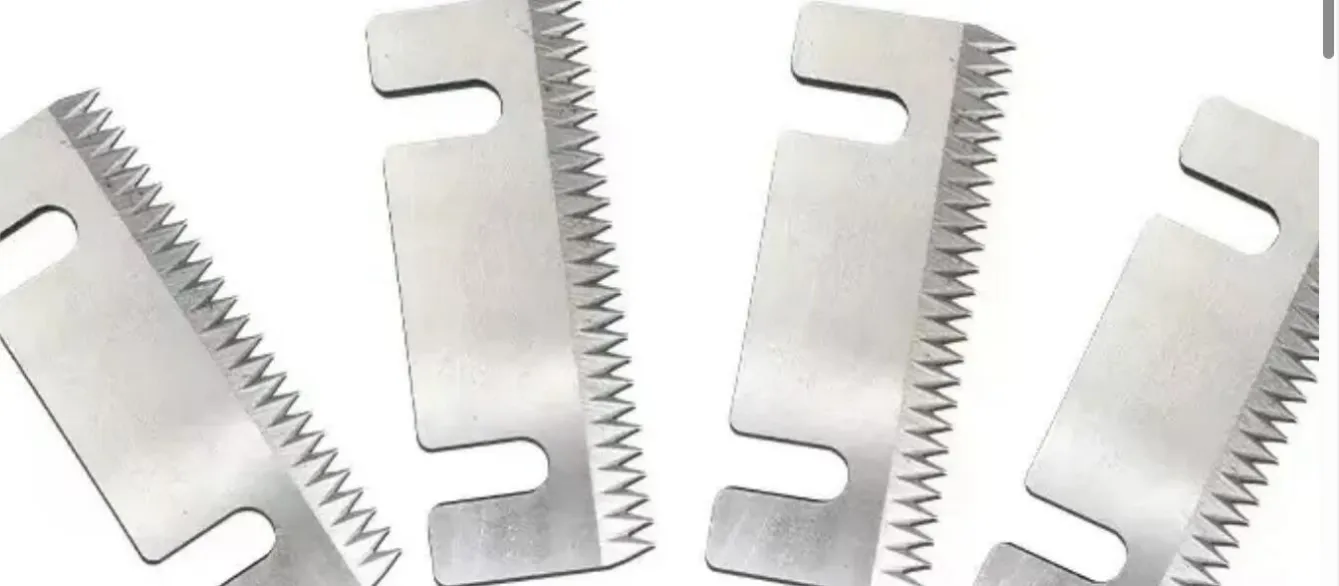
Potato processing is a wet, mildly abrasive and, in some cases, slightly acidic environment. Stainless grades such as 420 and 440A are common choices because they combine corrosion resistance with usable edge retention, and they tolerate daily washdown cycles. Where wear resistance requirements are higher, higher-alloy stainless grades or special steels may be considered.
Hardness should be specified as a working range for the application, not as the highest number available. A blade that is too soft wears quickly and loses strip quality; a blade that is too hard becomes brittle and can chip when it meets frozen product, stones or other hard inclusions. The correct balance keeps the edge stable through long runs while surviving the occasional impact.
On a potato line, blade quality is measured in strip consistency and hours between changes - not in how the edge feels out of the box.
Cleanability and hygiene
Potato processing equipment is cleaned frequently and thoroughly. Blades with polished, smooth surfaces clean down faster and leave fewer places for starch and debris to collect. Simple, crevice-free mounting designs support the same goal. For plants serving retail or export customers with strict hygiene audits, surface finish and material grade are worth specifying in writing rather than leaving to the blade supplier's default.
Plan the replacement cycle
The most expensive blade is the one that fails mid-shift. Starch is abrasive and, over time, it rounds the cutting edge; the first symptom is usually a slow drift in strip quality rather than a visible defect. Track blade life in production hours per set, keep a sharp spare set per machine position, and treat sharpening as a scheduled task. This turns blade changes into planned downtime instead of emergency stops.
Ordering blades for your line
To specify potato processing blades correctly, send the machine model and blade position, the product and target cut, the current blade drawing or sample, and your hygiene requirements. ZHONGJIAN TECH produces food processing blades and machine knives in food-grade stainless steels, to drawing or sample dimensions, with polished surfaces for easy cleaning. Send your details to ferrytk898@gmail.com and we will confirm a specification and quotation for your line.